Updated
Japanese Hanafuda Brands
For over a century, dozens of Japanese manufacturers have produced Hanafuda cards, each competing for customers using distinctive branding and art styles. Understanding these manufacturers — their marks, brands, and histories — is essential for collectors, historians, and anyone seeking to identify and attempt to date vintage decks. This guide covers both current producers and the many extinct companies whose cards can still be found circulating today.
Identifying a Deck
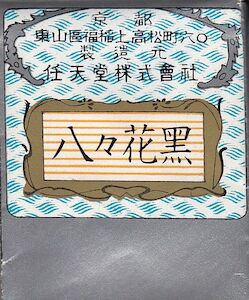
The branding system of traditional Hanafuda manufacturers can be confusing. Commonly, the top of the container (box or wrapper) displays a brand name which generally indicates the quality of the cards inside. Meanwhile the front end identifies the card type. For example, a box of Nintendō cards with a portrait of Napoleon on the top indicates that it contains their highest-quality cards, but that doesn’t prove what is inside: it could contain either Hanafuda or Kabufuda cards (it is worth noting that Nintendō Mushi cards often use a sticker on the top to indicate the box contents).
© George Pollard🅭🅯🄏🄎
The end of a Nintendō wrapper indicating that it contains standard (八々花 hachihachibana) Hanafuda cards, with black (黒) backs.
Traditionally, decks were boxed in sets of two, usually pairing one deck with black backing paper along with another having red backing paper. The outer box containing the two decks side-by-side then has enough width to display a wider image on the front (often a variation of the box image), and each deck inside the box would be wrapped individually.
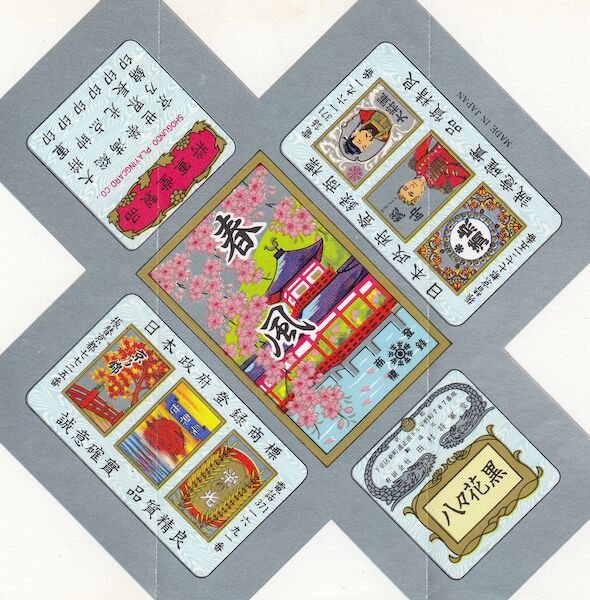
An example wrapper for a deck is shown folded flat below. The front end of the box (at bottom right) is as discussed above. The sides of the wrapper display the packaging of other brands from the manufacturer and sometimes awards that they have won, and the rear end of the wrapper (at top left) usually has text about the manufacturer or a list of brands.
© George Pollard🅭🅯🄏🄎
Anatomy of a Tamura Shōgundō Hanafuda wrapper.
Manufacturer’s Marks
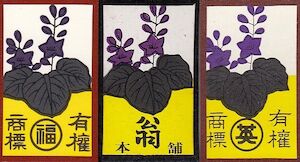
Within the deck, the manufacturer’s name or mark typically appears on the yellow Paulownia “junk” card. On older decks, however, it might appear on a Peony or Wisteria (see below for an example), or even on an entirely different card.
© George Pollard🅭🅯🄏🄎
Examples of manufacturer’s marks as they appear on the Paulownia card (from left to right): Nintendō, Angel, and Maruē.
Manufacturer’s marks typically consist of a character enclosed within a geometric shape. The character might be a simplified version of the company name,Also be aware that Japanese can be written in either direction; Ostasiatische Spielkarten (136) describes a deck made by a mysterious manufacturer named ‘Dōtennin’! or some other favourable term. When spoken aloud, both the shape and the character are ‘read’ together, so that Nintendō’s mark — a stylized 福 (fuku ‘good fortune’) inside a circle — is read maru-fuku ‘circle-fuku’, much like the brand “Circle K”.
Common shapes include: the circle (丸 maru), square (角 kaku), carpenter’s square or corner at top-right (┐) (矩 kane), and an upward-pointing corner (∧), referred to as a mountain (山 yama).
However, there are many exceptions to these conventions, and some manufacturers use symbols that function more like logos.
Index of Marks
The following index provides quick navigation to each manufacturer’s section based upon their specific maker’s mark(s). Click any symbol to jump straight to the detailed entry:


(none)
Seieidō
Dating Decks
Dating old decks can be difficult, as manufacturers have published little information about when certain brands or patterns were produced. Thus, we can only go via publicly-available information. However, several clues can help to narrow down the age of a deck:
© George Pollard🅭🅯🄏🄎
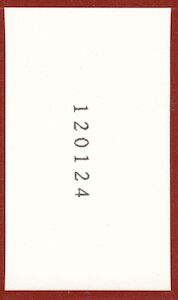
A Nintendō blank card indicating the date of manufacture (2012–01–24).
Explicit dates: on recent Nintendō decks, the blank card included has a 6-digit date of manufacture printed on it. This is the only case I know where the date is explicitly marked.
Tax stamps: the most reliable dating method for older decks is to examine their tax stamps (see below), if the deck has any still present. This works for decks produced from 1902 up until the playing-card tax was abolished in 1989.
Text direction: Japanese text written right-to-left generally indicates that the deck was made before the end of WWII (from here on, I use the term ‘pre-war’). Thus, 任天堂 is written 任天堂 on very old decks. However, some manufacturers (such as Ōishi Tengudō or Nihon Karuta) have persisted in using right-to-left ordering even into the modern era, so this indication must be used with caution.
Barcodes: for more recent decks, barcodes can give some clues: Japanese barcodes beginning with have been used since 1978, but barcodes beginning with were introduced in 1992.
Tax Stamps
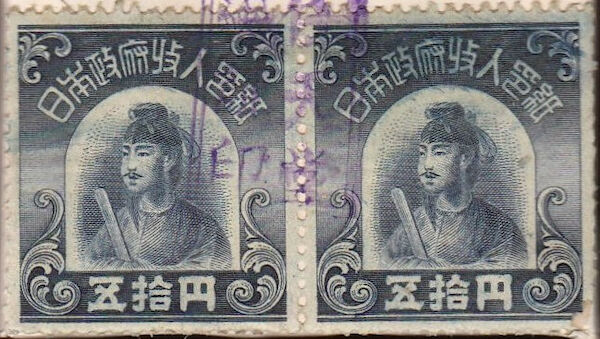
For most of the 20th century, Hanafuda cards were taxed by the Japanese government. Because the tax rate changed frequently, stamps can help to identify when a deck was sold. Unfortunately, many second-hand decks will not retain the tax stamps that were present at the time they were purchased.
The following table summarizes the tax rates over time, based on a series of articles provided by Ebashi:
Date Introduced | Tax Amount |
|---|---|
July 1, 1902 | 20 sen |
April 1, 1926 | 50 sen |
April 1, 1940 | 70 sen |
November 22, 1941 | 1½ yen |
February 15, 1944 | 3 yen |
August 30, 1946 | 10 yen |
March 31, 1947 | 30 yen |
November 30, 1947 | 100 yen |
July 7, 1948 | 130 yen |
March 28, 1951 | 50 yen |
March 31, 1954 | 60 yen |
June 14, 1957 | 60 yen |
October 1, 1960 | 60 yen |
March 31, 1962 | 40 yen |
April 1, 1989 | abolished |
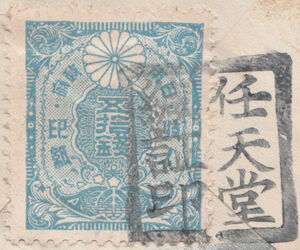
© 2023 Fabrice Heiligused with permission
This 50 sen stamp has a clear Nintendō (任天堂) cancellation mark.
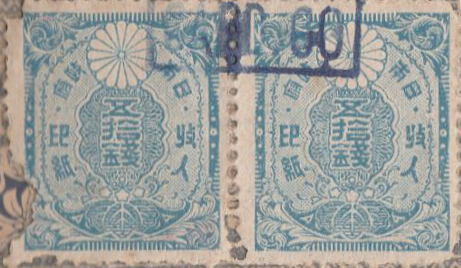 © 2019 Fabrice Heiligused with permission
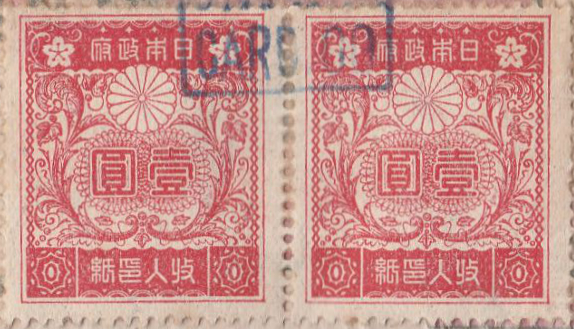 © 2019 Fabrice Heiligused with permission
Late Taishō‐era tax stamps: blue 50 sen on left, red 1 yen on right.
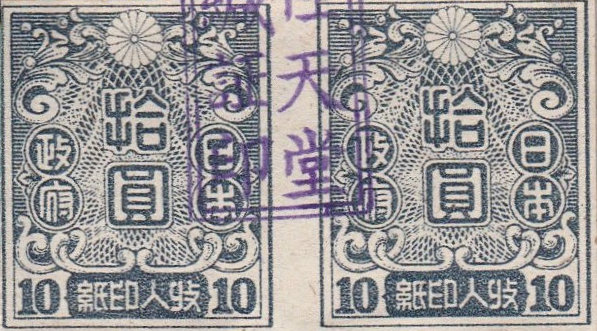
© 2023 Fabrice Heiligused with permission
Two 10 yen (拾圓) stamps; the deck had 30 yen total, indicating that the deck was sold in 1947. The cancellation mark is Nintendō’s.
© 2023 Fabrice Heiligused with permission
Two 50 yen (𠄡拾円) stamps, indicating the deck was sold between 1947–48.
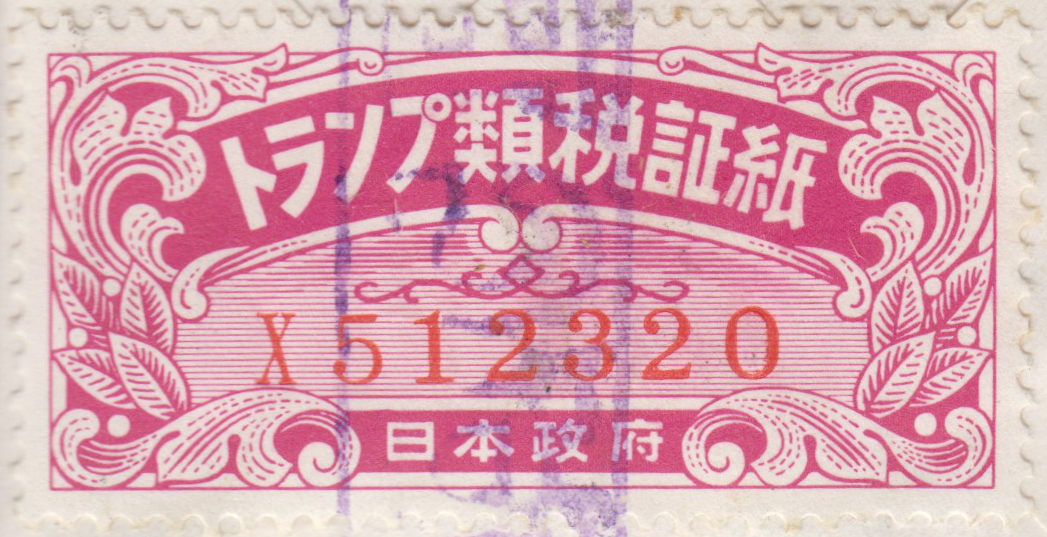
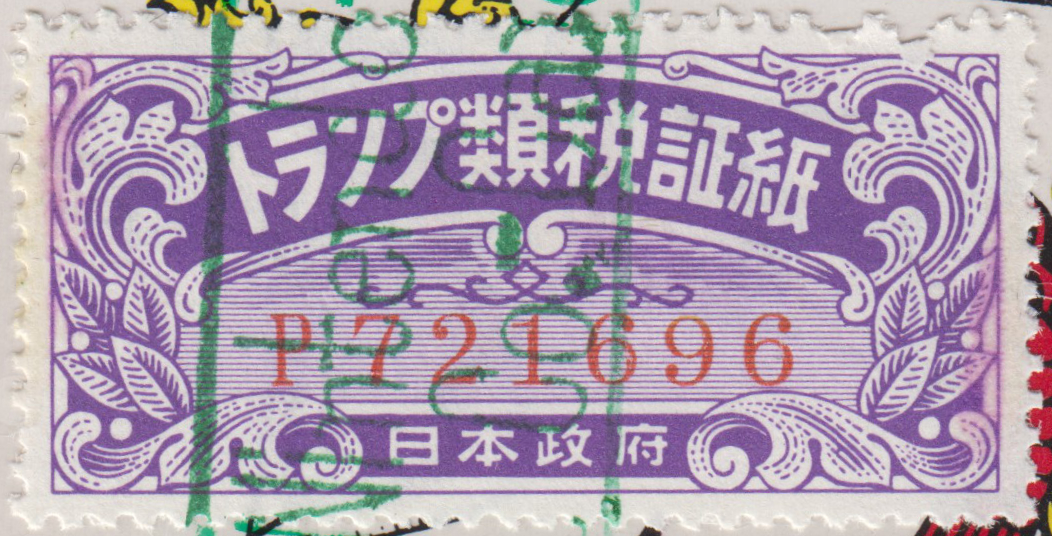
Tax stamps of the type used from 1960 until the tax was abolished in 1989. Pink was used for Hanafuda decks and purple was used for Western style (“trump”) decks.
Current Manufacturers
All current Japanese manufacturers that I know of are based in Kyōto prefecture. This continues a long tradition: the Kansai region (which includes both Kyōto and Ōsaka) has been the centre of Hanafuda production since the appearance of the cards.
 Nintendō (任天堂)
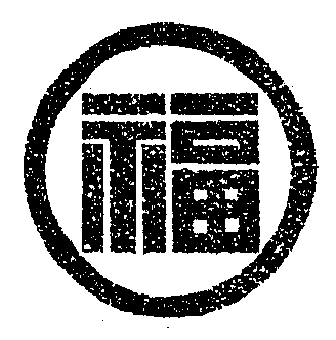
Nintendō’s marufuku mark, registered in 1900 by Yamauchi Fusajirō (東京書院, 日本登録商標大全. 第六編 (1905), 67).
Nintendō is the most prominent company that produces Hanafuda cards today. The company was founded in Kyōto in 1889 by Yamauchi Fusajirō (山内房治郎), and it was run by the Yamauchi family for three generations until Yamauchi Hiroshi (山内溥) stepped down in 2002.
A brief summary of their later success: after WWII, Nintendō managed to survive a period of crushing taxation on playing-card products, which wiped out many of the smaller manufacturers. In the second half of the 20th century they (famously!) diversified into children’s toys and, later on, video games.
Nintendō’s manufacturer’s mark is a circled 福 (fuku, ‘fortune’). This was originally the trade-name (屋号 yagō) of the Yamauchi family.
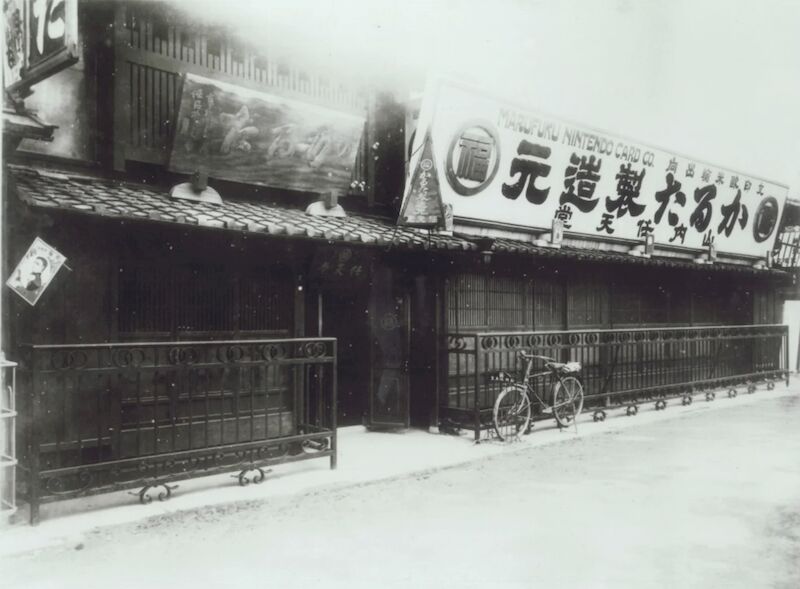
The Nintendō storefront in Kyōto (original source dates this as 1889, but it seems more likely to be after 1900).
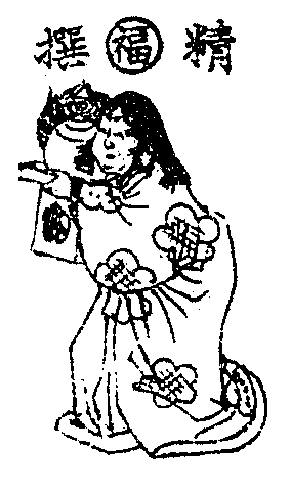
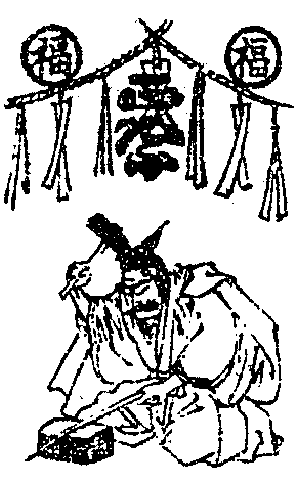
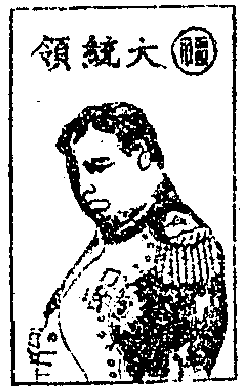
Some early Nintendō trademarks, registered in 1900 by Yamauchi Fusajirō (東京書院, 日本登録商標大全. 第六編, 67). Note that at this time Nintendō had not yet started using the stylized form of the marufuku symbol.
In the past Nintendō produced many varieties of local-pattern Hanafuda cards or Mekuri cards, but today they only produce Hanafuda and Kabufuda cards. Their current brands are:
大統領 (daitōryō, a translation of ‘first consul’, Napoleon’s title from 1799–1804), trademarked in 1901東京書院, 日本登録商標大全. 第六編, 67.
(丸福)天狗 ((Marufuku)tengu, ‘Marufuku Tengu’), trademarked in 1912東京書院, 日本登録商標大全. 第5輯 下 (1913), 276.
都の花 (Miyako no Hana ‘flowers of the city’); presumably Kyōto
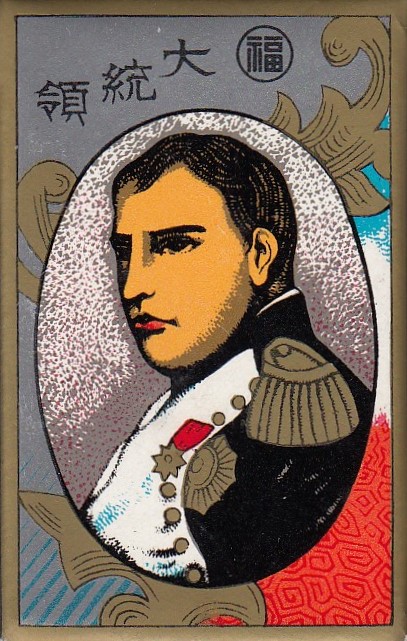
© George Pollard🅭🅯🄏🄎
Nintendō’s Daitōryō packaging (1970s). Note the Marufuku mark at top right.
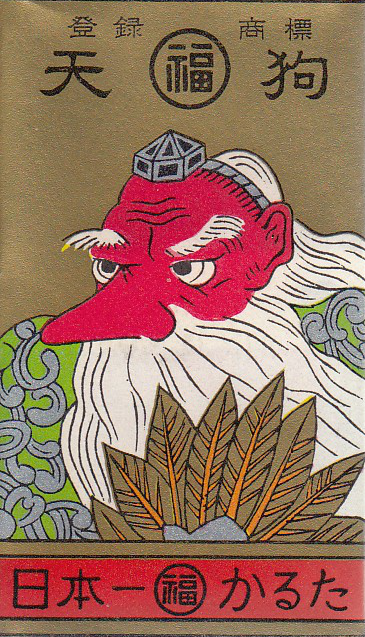
© George Pollard🅭🅯🄏🄎
Nintendō’s Tengu packaging.
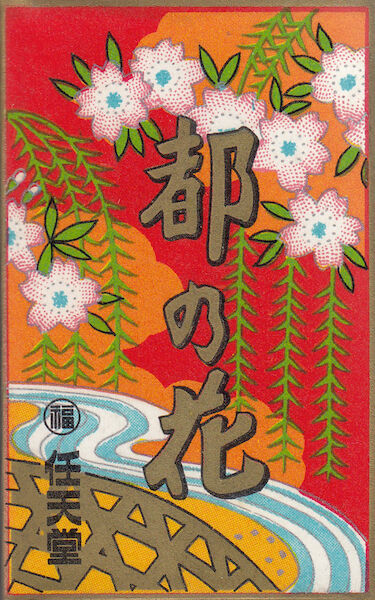
© George Pollard🅭🅯🄏🄎
Nintendō’s Miyako no Hana packaging.
Brands which Nintendō used to produce in the past include:George Hatton, ‘Modern Japanese Wrappers’ (1981), 54.
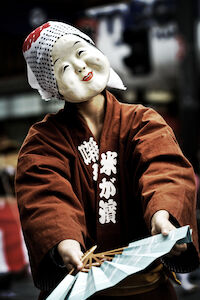
Otafuku (also known as Okame) is a traditional character associated with good luck, and often appears in kagura performances alongside Hyottoko.
正宗 (Masamune, a famous swordsmith), trademarked in 1900;東京書院, 日本登録商標大全. 第六編, 67. see trademark at right
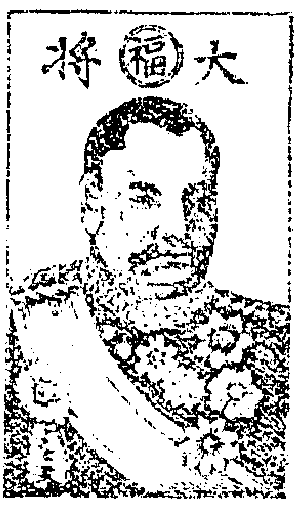
大将 (taishō, ‘general’), trademarked in 1900;Ibid. see trademark at right
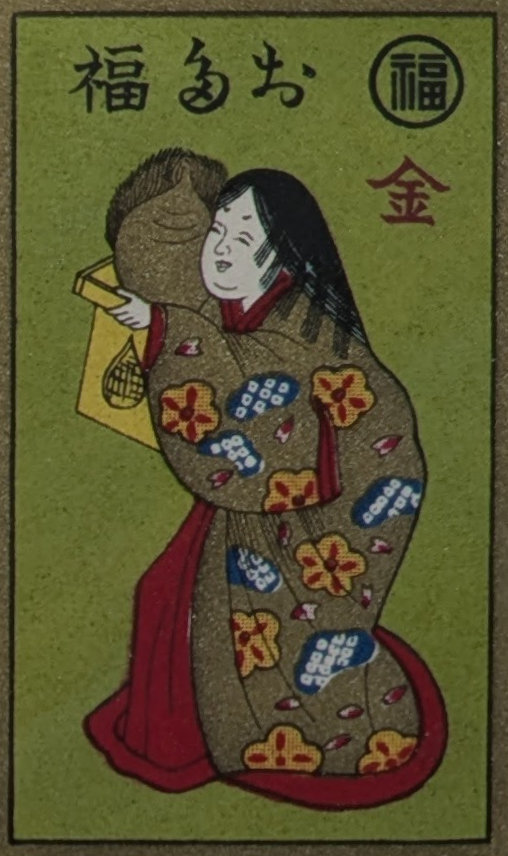
お多福 (otafuku, ‘moon-faced woman’), trademarked in 1900Ibid.
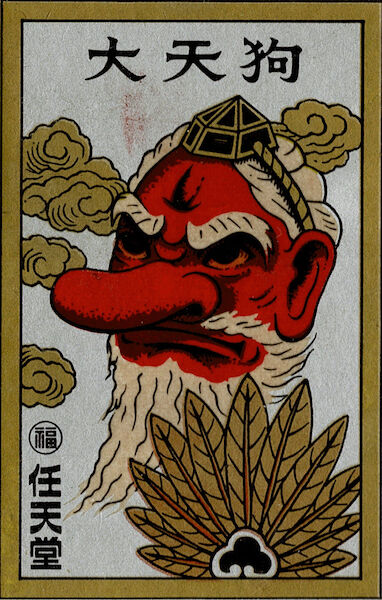
大天狗 (daitengu, the most powerful or chief type of Tengu), introduced in 1977
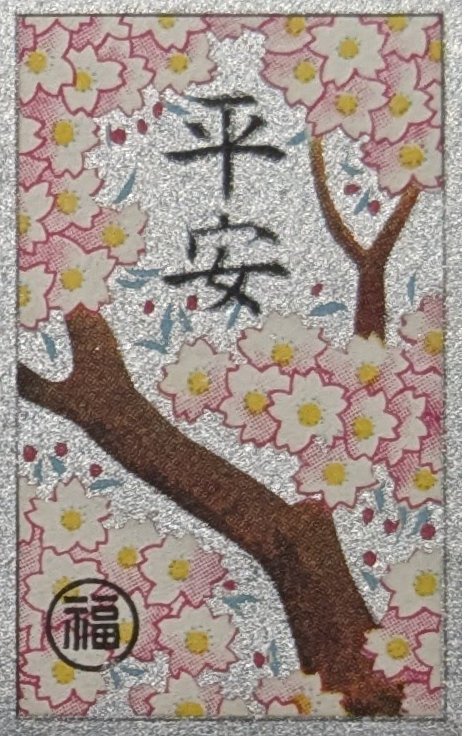
平安 (heian, ‘peace’, also a Japanese era name)
© George Pollard🅭🅯🄏🄎
Nintendō’s Daitengu packaging.
© George Pollard🅭🅯🄏🄎
The otafuku wrapper.
© George Pollard🅭🅯🄏🄎
The heian wrapper.
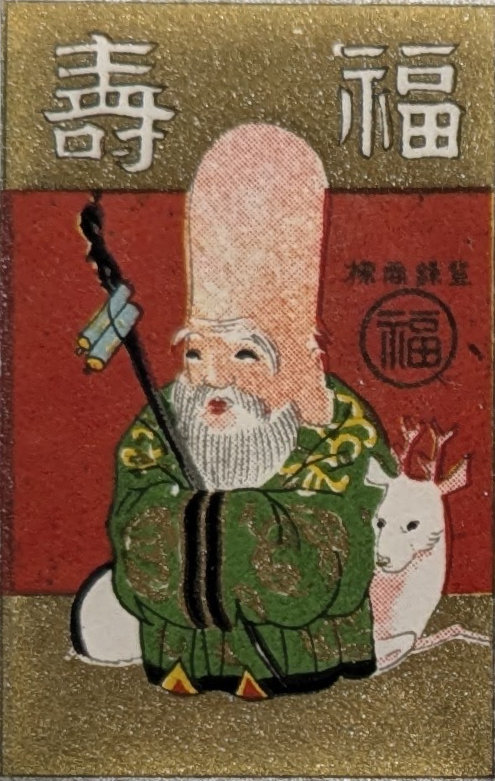
福壽 (fukuju, ‘fortune & longevity’), picturing the lucky god Fukurokuju (福禄寿); the 福 is also again the Nintendō maker’s mark and the character 壽 appears on the sake cup card
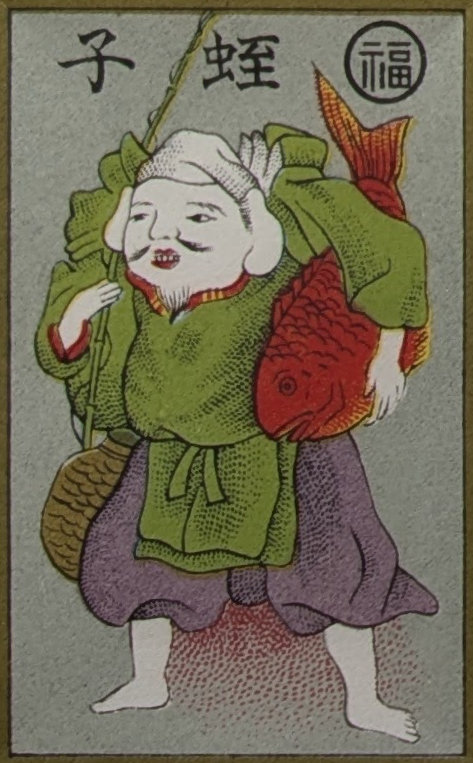
蛭子 (Hiruko, another lucky god also known as Ebisu)
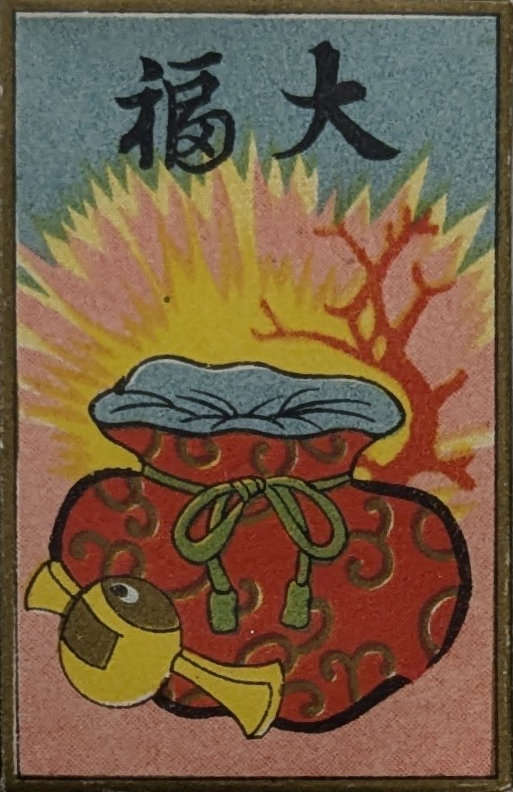
大福 (daifuku, ‘great luck’), with the wrapper depicting some of the attributes of the lucky god Daikokuten
© George Pollard🅭🅯🄏🄎
The fukuju wrapper.
© George Pollard🅭🅯🄏🄎
The hiruko wrapper.
© George Pollard🅭🅯🄏🄎
The daifuku wrapper.
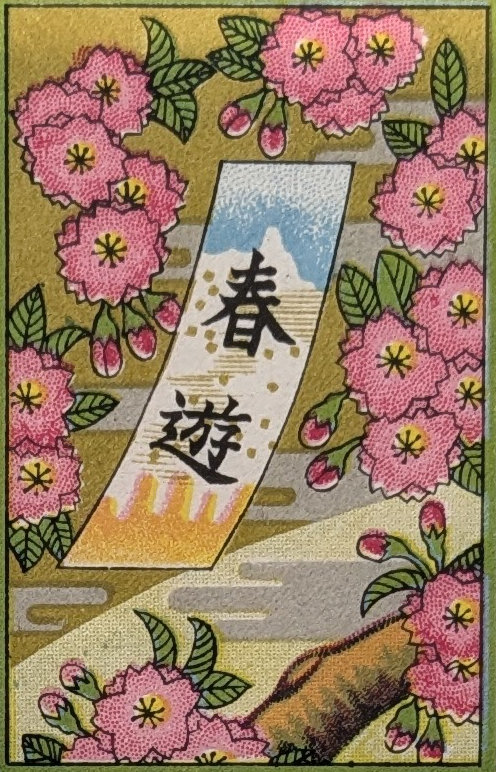
春遊 (shun’yu, ‘spring outing’, especially of the Emperor)
逰[ぶ?]かるた (asobu karuta, ‘playing cards’)
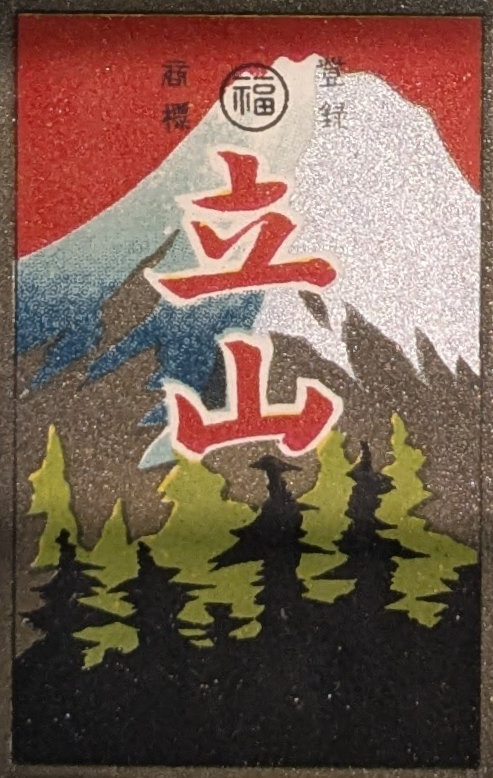
立山 (tateyama, one of the three holy mountains of Japan)
© George Pollard🅭🅯🄏🄎
The shunyu wrapper.

© George Pollard🅭🅯🄏🄎
The asobu karuta wrapper.
© George Pollard🅭🅯🄏🄎
The tateyama wrapper.
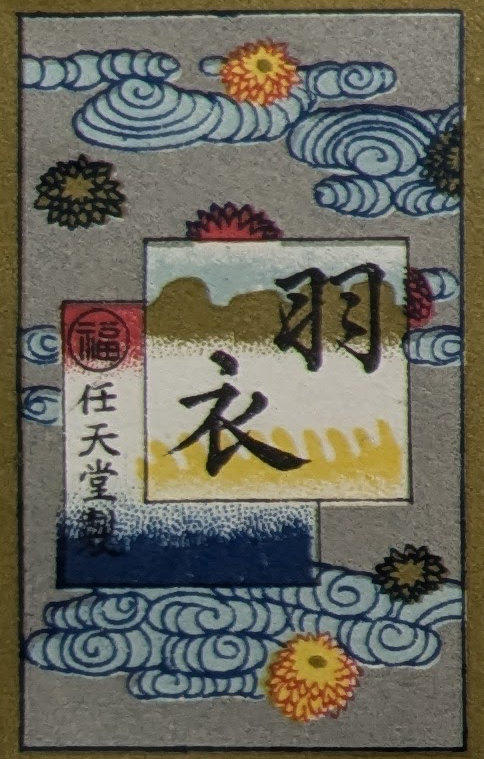
羽衣 (hagoromo, ‘feather robe’)
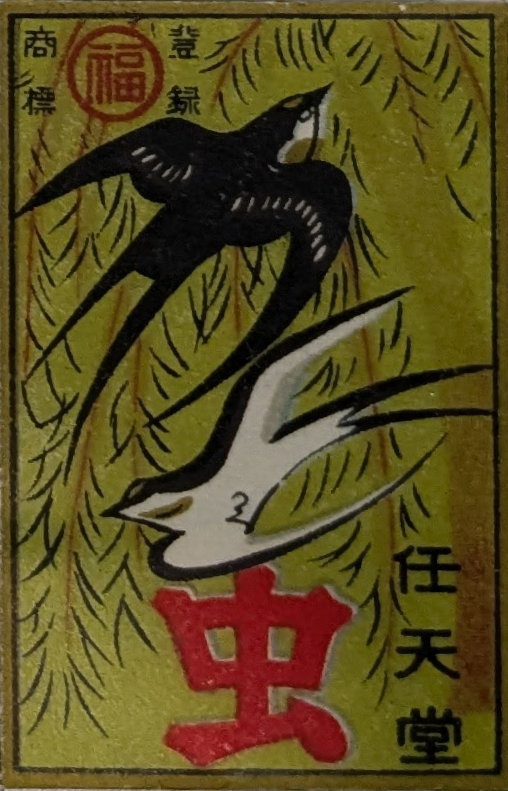
虫 (mushi, ‘insect’); with an image of swallows
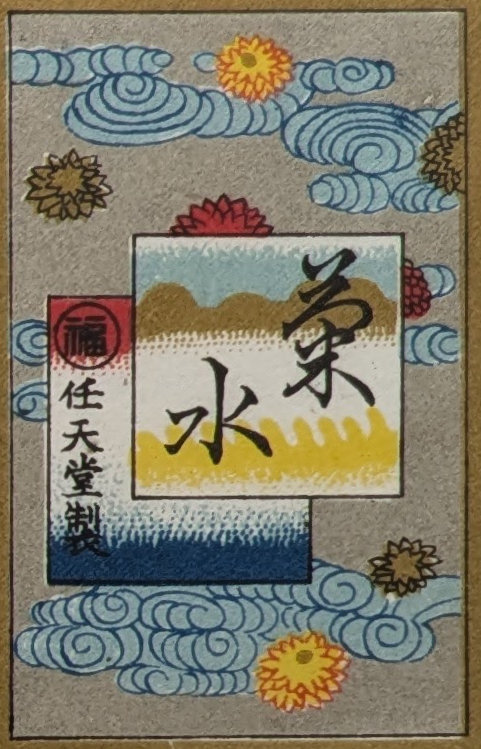
菊水 (kikusui, ‘floating chrysanthemum’)
© George Pollard🅭🅯🄏🄎
The hagoromo wrapper.
© George Pollard🅭🅯🄏🄎
The mushi wrapper.
© George Pollard🅭🅯🄏🄎
The kikusui wrapper.
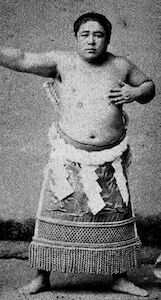
Konishiki wearing his keshō-mawashi. It can be seen that the wrapper is a faithful representation.
三羽鶴 (sanbadzuru, ‘three cranes’), not in use as of 1980
a wrapper picturing a cat (with no brand name), but which is probably a 招き猫 (maneki neko, ‘beckoning cat’)
小錦印 (konishiki shirushi, ‘Konishiki brand’), depicting a sumo wrestler’s keshō-mawashi; Konishiki Yasokichi (1866–1914) was the 17th yokozuna
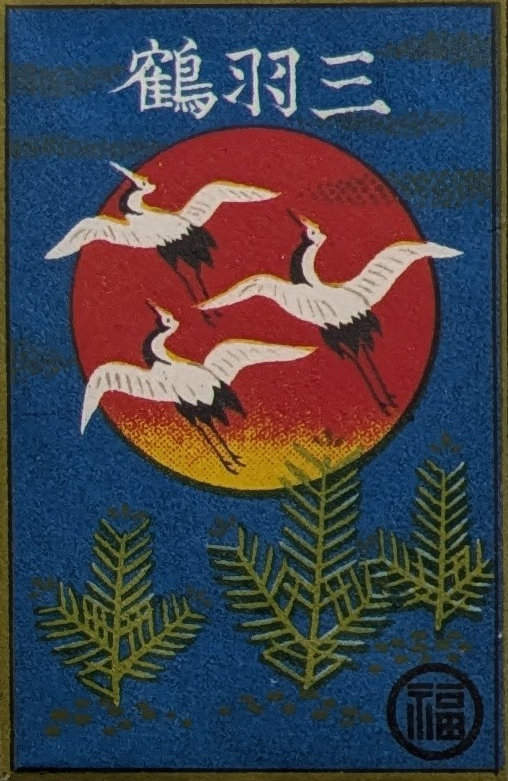
© George Pollard🅭🅯🄏🄎
The sanbadzuru wrapper.
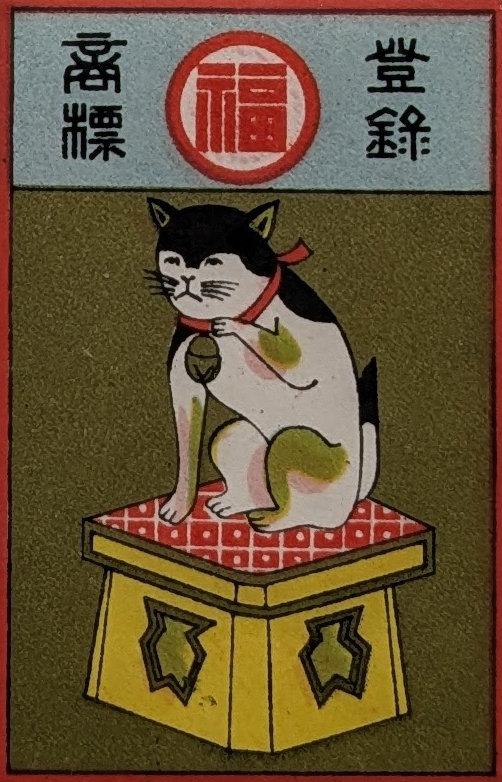
© George Pollard🅭🅯🄏🄎
The maneki neko wrapper.
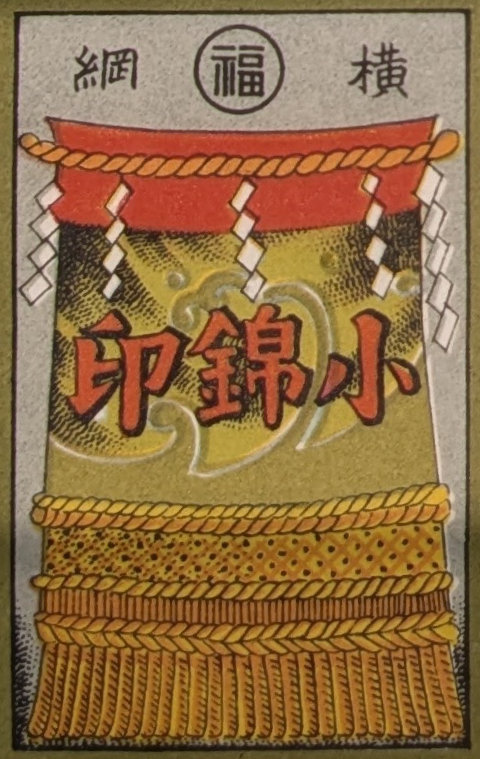
© George Pollard🅭🅯🄏🄎
The konishiki shirushi wrapper.
大王印 (daiō shirushi, ‘great king brand’, I am unsure if this refers to anyone in particular)
another (unnamed?) seal-type wrapper
御所櫻 (goshozakura, ‘imperial palace cherry blossoms’)
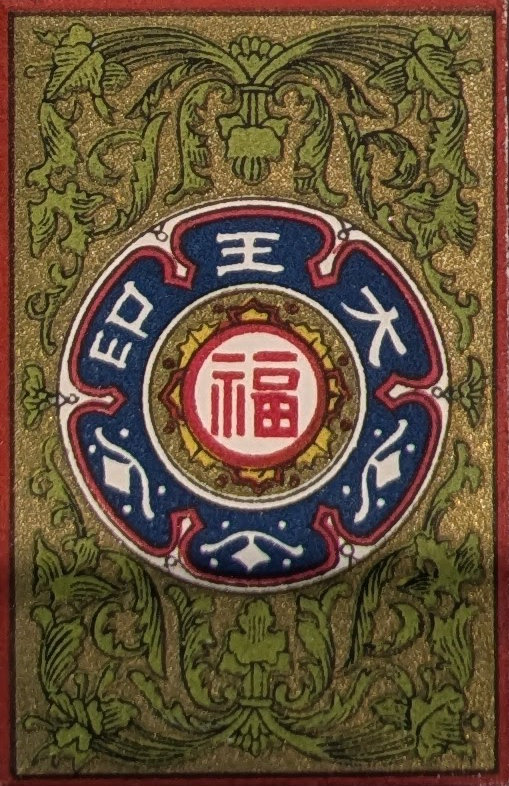
© George Pollard🅭🅯🄏🄎
The daiō shirushi wrapper.
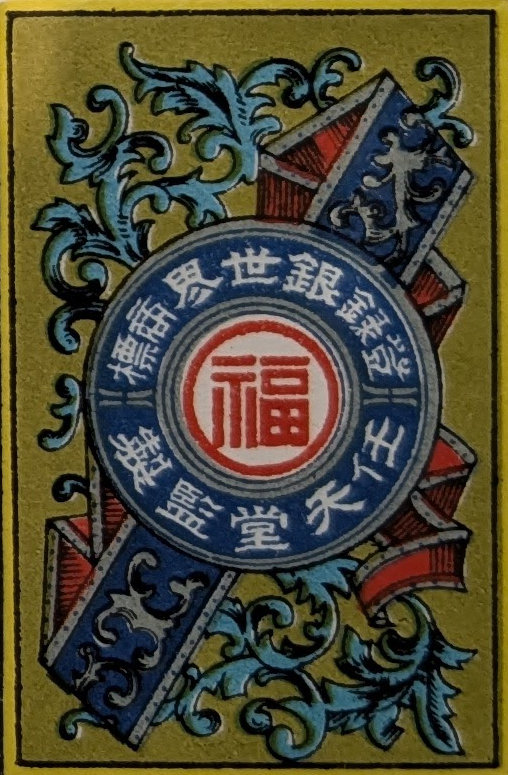
© George Pollard🅭🅯🄏🄎
Another seal-type wrapper.
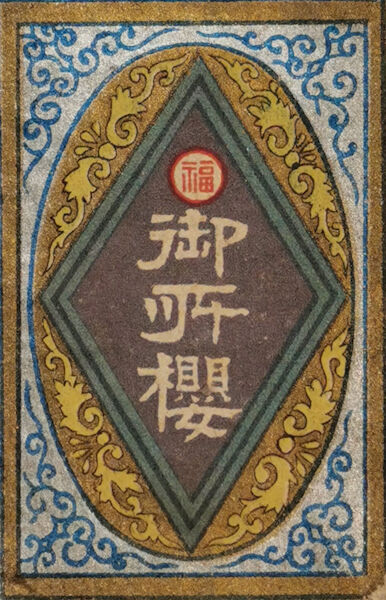
© 2021 beforemario.comused with permission
The goshozakura wrapper.
金龍 (kinryū, ‘gold dragon’)
日乃出 (hinode, ‘sunrise’)
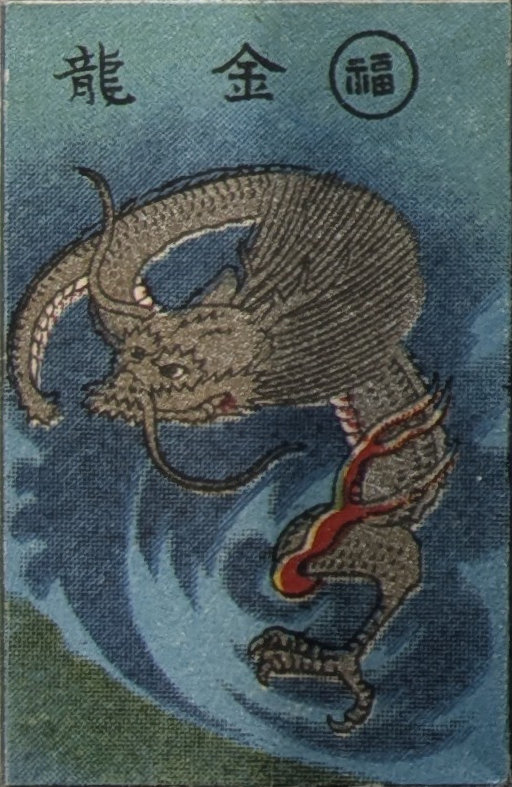
© George Pollard🅭🅯🄏🄎
The kinryū wrapper.
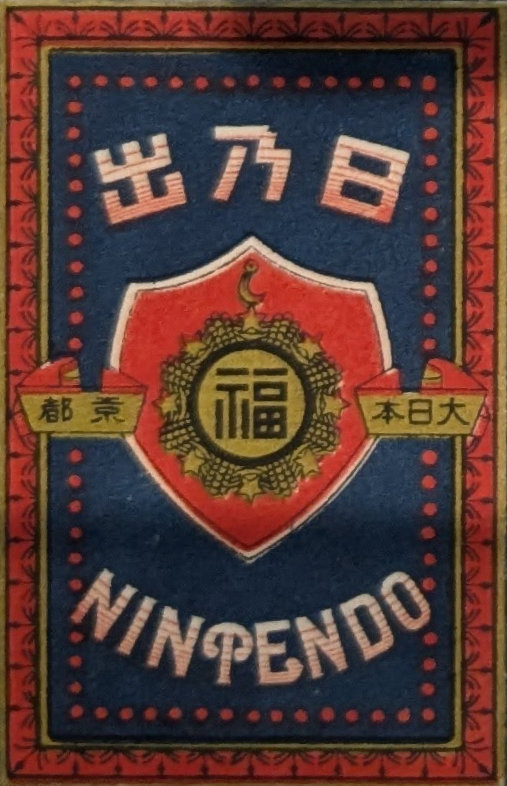
© George Pollard🅭🅯🄏🄎
The hinode wrapper.
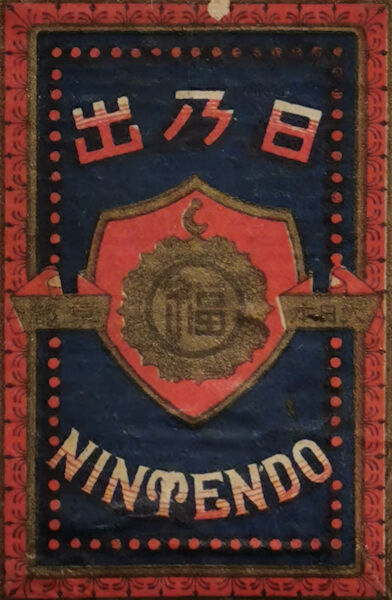
© 2021 beforemario.comused with permission
Another hinode wrapper.
白梅 (hakubai, ‘white plum’), not in use as of 1980
勝天狗 (shōtengu, ‘victory Tengu’)
常磐 (tokiwa, ‘eternal’, a reference to the waka that appears on the pine cards in some decks)
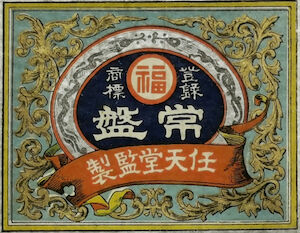
© 2021 beforemario.comused with permission
The tokiwa external box.
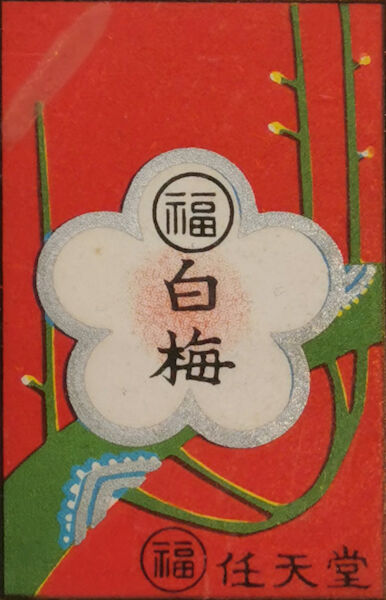
© 2021 beforemario.comused with permission
The hakubai wrapper.
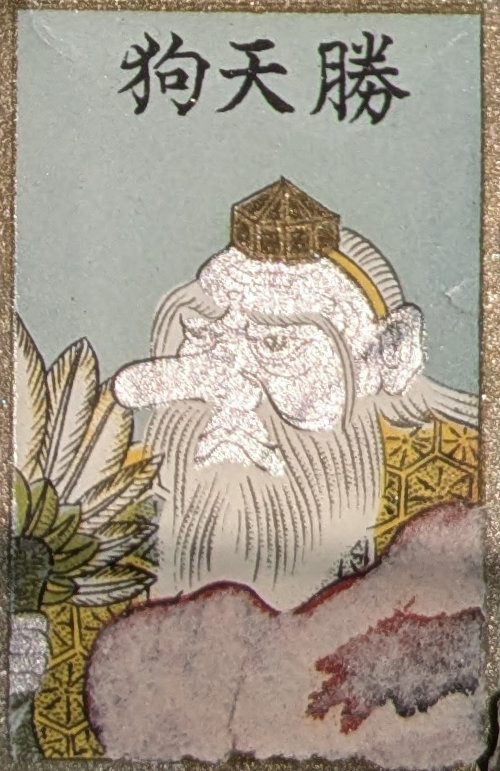
© George Pollard🅭🅯🄏🄎
The shōtengu wrapper (damaged at bottom right).
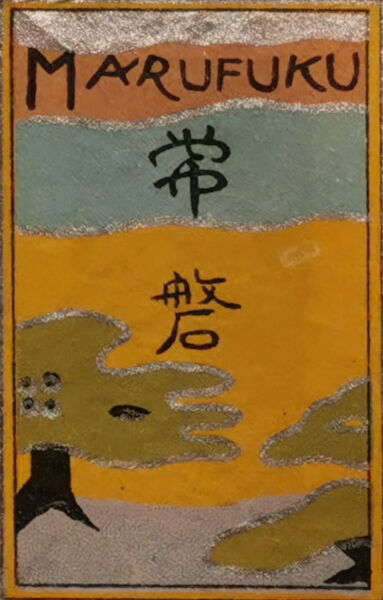
© 2021 beforemario.comused with permission
The tokiwa wrapper.
Others I do not have any images of include:
櫻乃山 (sakura no yama, ‘mountain cherry blossoms’), not in use as of 1980
朝日桜 (asahi sakura, ‘sunrise cherry blossoms’)
千代桜 (chiyo zakura, ‘thousand-year cherry blossoms’)
四光印 (shikōjirushi, ‘four brights brand’), trademarked in 1916東京書院, 日本登録商標大全. 第9輯 下 (1917), 286.
丹頂 (tanchō, ‘red-crested crane’, that appears on the pine bright)
One interesting deck they used to produce was Hana-Trump, which combined Hanafuda cards with the cards of the international standard playing card deck. Each rank of the standard pack corresponds to a month of the Hanafuda deck:
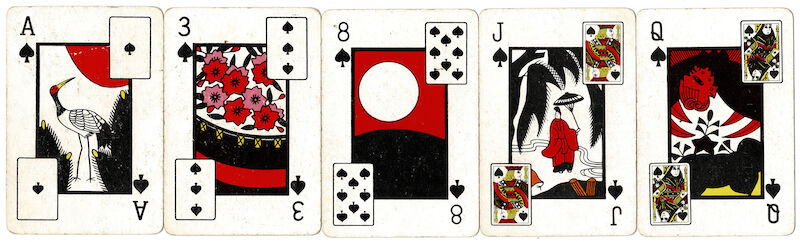
© George Pollard🅭🅯🄏🄎
The 5 Brights of Nintendō’s “Hana-Trump” deck.
Because there are four more cards in the standard deck compared to the Hanafuda one, Nintendō added an additional four cards (and two jokers) to the set. These extra cards are counterparts for specialized pieces of equipment present in boxed Hachi-Hachi (八八) sets.
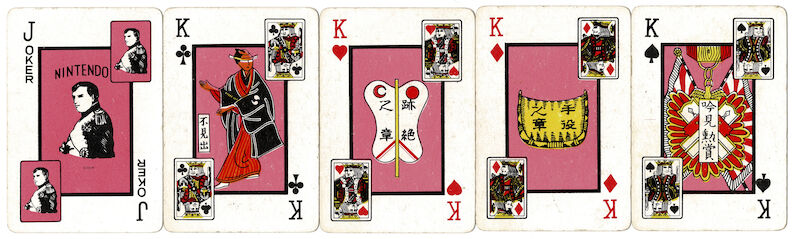
© George Pollard🅭🅯🄏🄎
The extra cards of Nintendō’s “Hana-Trump” deck. From left-to-right, after the joker, these are: a blindfolded samurai, with text reading 不見出
(88 sets have a piece labelled 不見転
, ‘loose morals’); a gunbai (軍配), a military leader’s fan which is nowadays used by sumo referees, which is inscribed 跡絶之章
(88 sets have a piece labelled 両桐絶体之章
); a rice winnowing basket (箕 mi) inscribed 手役之章
(hand-yaku prize); and an award medal reading 吟見勲賞
(Ginmi Kunshō, ‘Ginmi Medal’), which is a prize for the ‘top player’ (Ginmi, usually spelt 吟味, 88 sets have a piece labelled 銀見勲章).
Currently Nintendō also produce many novelty decks themed with their videogame characters, such as Mario (pictured below), Pokémon, Mario Pikachu (limited edition, 2016), Kirby (2020), among others.
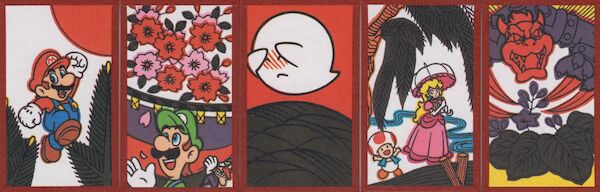
© George Pollard🅭🅯🄏🄎
Nintendō’s Mario deck, featuring recurring characters from the Mario series.
Nintendō have also on occasion produced decks for other companies, such as the Shikishima Hanafuda (敷島花札) produced for OkunoKaruta (奥野かるた店), a games shop in Tōkyō.
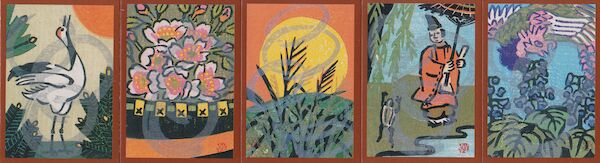
© George Pollard🅭🅯🄏🄎
Okuno Karuta’s Shikishima Hanafuda. The cards were designed by the print artist Itō Takumi (伊藤卓美, b. 1946). They are larger than normal Hanafuda and the cards are printed on flat cardboard, not wrapped with backing paper.
 Ōishi Tengudō (大石天狗堂)
Also based in Kyōto, ŌishiTengudō produces a wide variety of traditional Japanese card games. As far as I know, they are the only major manufacturer still producing Mefuda cards. They also produce reproductions of even older cards, such as the Unsun deck.
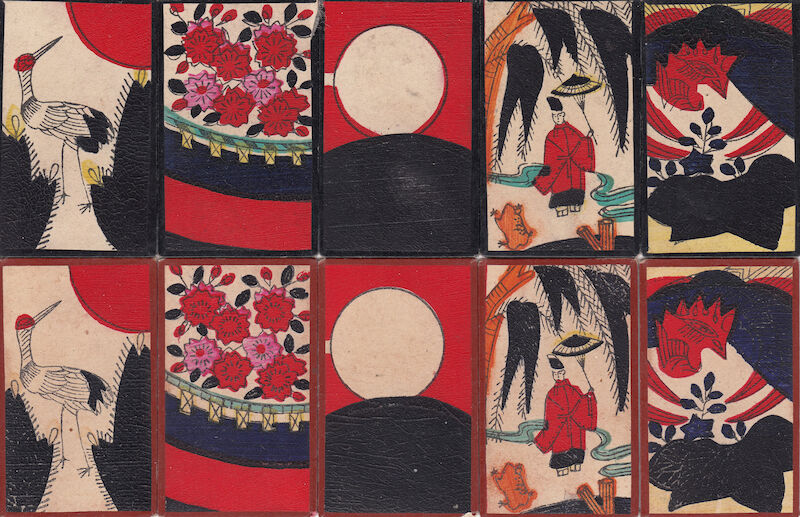
© George Pollard🅭🅯🄏🄎
Cards from two different hand-printed Ōishi Tengudō decks, showing the high variability caused by the technique.
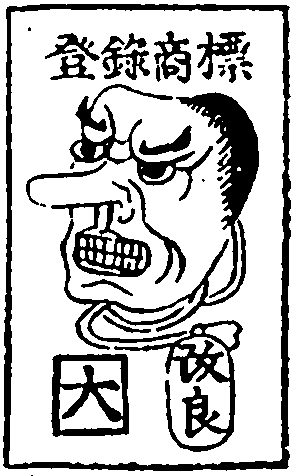
Ōishi Tengudō’s earliest trademark, registered on the 5th of October 1893 by Ōishi Sato (大石サト) (東京書院, 日本登録商標大全. 第六編, 65). This trademark was clearly based on that of Sanjōya.
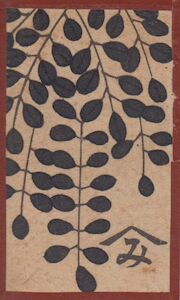
© George Pollard🅭🅯🄏🄎
Ōishi Tengudō’s manufacturer’s mark, on a Wisteria card from an old Narikin deck.
Their main manufacturer’s mark is み with corner at top, but on some decks (e.g. Echigo-kobana), they have used 大 in a square. In the past they have also used circled 高.
Ōishi Tengudō’s product line has featured the following brands:Hatton, ‘Modern Japanese Wrappers’, 57–8.
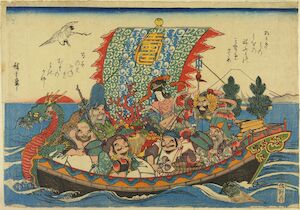
The takarabune is a mythical ship that carries the seven lucky gods, as shown in this print by Hiroshige (c. 1840).
金天狗 (kintengu, ‘golden Tengu’), also used for Kabu and Tehonbiki cards, trademarked in 1921東京書院, 日本登録商標大全. 第18輯 下 (1924), 330.
銀天狗 (gintengu, ‘silver Tengu’), also used for Kabufuda, trademarked in 1921Ibid., 331.
若天狗 (wakatengu, ‘young Tengu’)
三天狗 (santengu, ‘three Tengu’)
成金 (narikin, ‘newly rich’, derived from a Shogi term), also used for Kabufuda, trademarked in 1921Ibid., 333.
リンカーン (rinkān, ‘Lincoln’), no longer in use as of 1979
福助 (fukusuke, a large-headed good luck doll), trademarked in 1917,東京書院, 日本登録商標大全. 第11輯 下 (1919), 328. no longer in use as of 1979
當矢 (atariya, ‘winning arrow’)
四季 (shiki, ‘four seasons’)
大江山 (ōeyama, a mountain near Kyōto)
寳船 (takarabune, ‘treasure ship’)
御所車 (goshoguruma, ‘ox-drawn coach’)
来福 (raifuku, ‘fortune comes’, a reference to the full yojijukugo “笑門来福”, ‘fortune comes to the home of those who smile’), trademarked in 1921東京書院, 日本登録商標大全. 第18輯 下, 333.
花津久志/花𛁫くし (hanazukushi, ‘assorted flowers’)
舞楽, (bugaku, a courtly dance with music)
𛀿𛀬ら, (sakura, but written with hentaigana characters)
一癶, (ippatsu, ‘one shot’, e.g. baseball home run or a mahjong term)
梅印, (umejirushi, ‘plum brand’), trademarked in 1915東京書院, 日本登録商標大全. 第8輯 下 (1916), 293.
三福, (sanfuku, ‘three fuku [masks]’), trademarked in 1915Ibid., 295.
國光, (kokkou, ‘national glory’), trademarked in 1915Ibid., 297.
橋立印, (hashidatejirushi, ‘Hashidate brand’), trademarked in 1921東京書院, 日本登録商標大全. 第17輯 下 (1923), 272.
松島印, (matsushimajirushi, ‘Matsushima brand’), trademarked in 1921Ibid.
(unnamed but with a picture of Miyajima, completing the Three Views of Japan), trademarked in 1921Ibid.
由良之助, (Yuranosuke, the name of a fictionalized version of the real-life Ōishi Kuranosuke), trademarked in 1921Ibid.
覇王 (haō, ‘supreme ruler’), trademarked in 1921東京書院, 日本登録商標大全. 第18輯 下, 332.
曻龍 (shoryū, ‘rising dragon’), trademarked in 1921Ibid., 333.
將軍 (shōgun, ‘Shogun’), trademarked in 1921Ibid., 334.
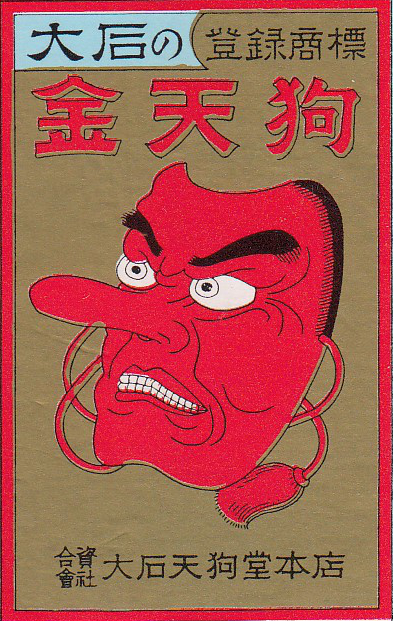
© George Pollard🅭🅯🄏🄎
Ōishi Tengudō’s kintengu wrapper. This is now their standard brand.
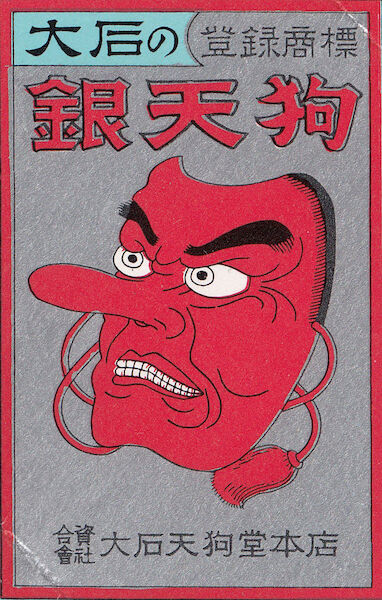
© George Pollard🅭🅯🄏🄎
Ōishi Tengudō’s gintengu wrapper.
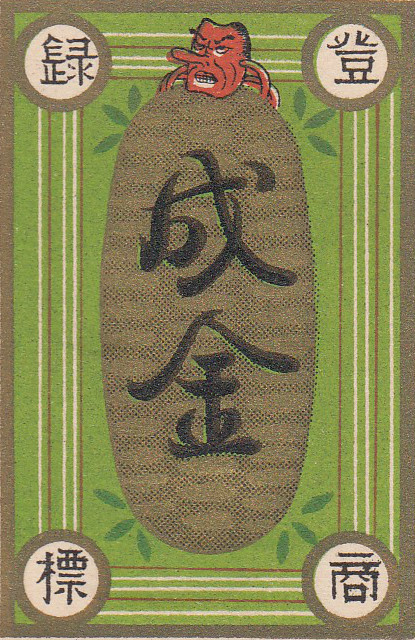
© George Pollard🅭🅯🄏🄎
Ōishi Tengudō’s narikin wrapper.
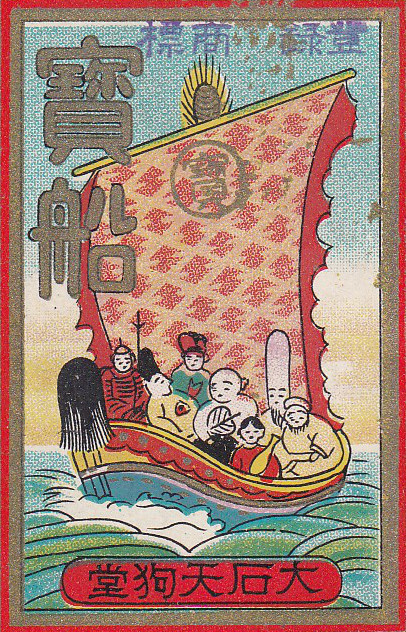
© George Pollard🅭🅯🄏🄎
Ōishi Tengudō’s takarabune wrapper.

© George Pollard🅭🅯🄏🄎
Ōishi Tengudō’s sakura wrapper.
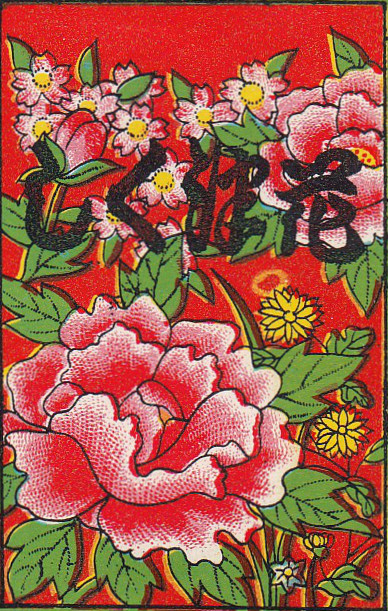
© George Pollard🅭🅯🄏🄎
Ōishi Tengudō’s hanazukushi wrapper.
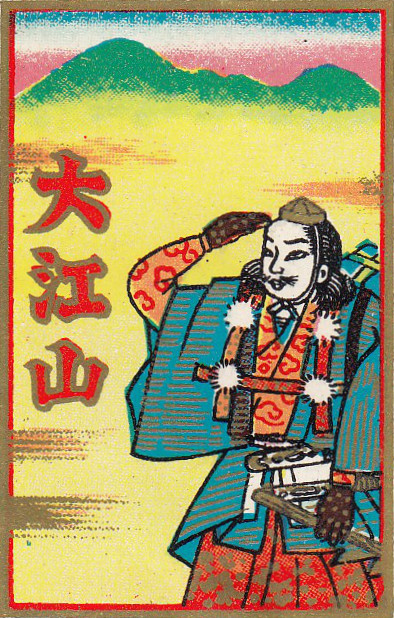
© George Pollard🅭🅯🄏🄎
Ōishi Tengudō’s ōeyama wrapper. The man is wearing the clothing of the Shugendō sect, which Tengu are also depicted as wearing.
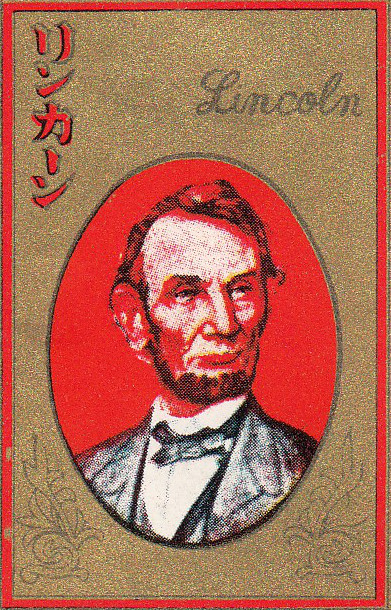
© George Pollard🅭🅯🄏🄎
Ōishi Tengudō’s Lincoln wrapper.
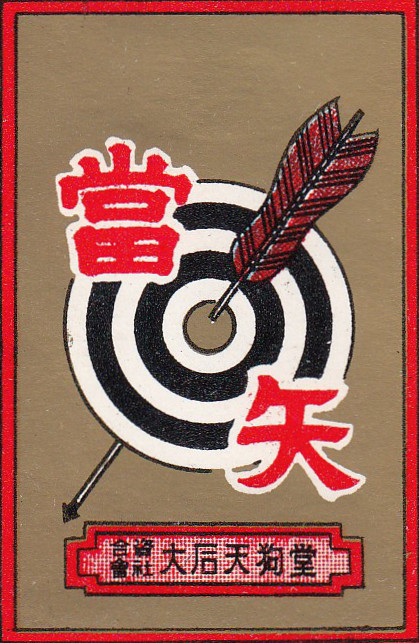
© George Pollard🅭🅯🄏🄎
Ōishi Tengudō’s atariya wrapper.
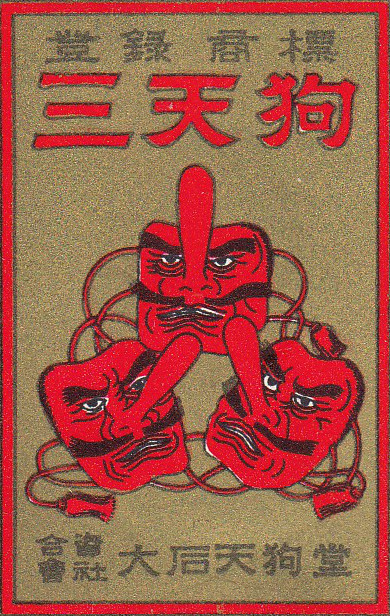
© George Pollard🅭🅯🄏🄎
Ōishi Tengudō’s santengu wrapper.
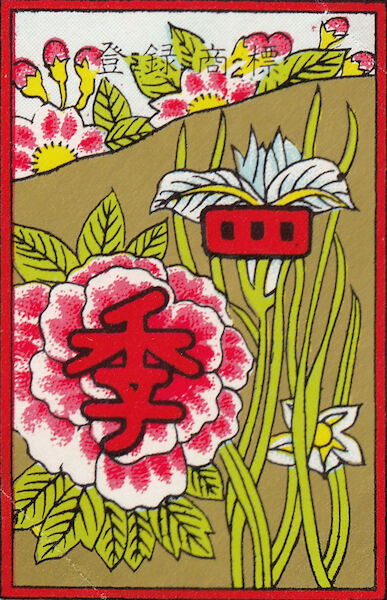
© George Pollard🅭🅯🄏🄎
Ōishi Tengudō’s shiki wrapper.
In addition to the many standard & local patterns of Hanafuda they produce, they also publish some novelty decks, such as the Kyōto Hanafuda:
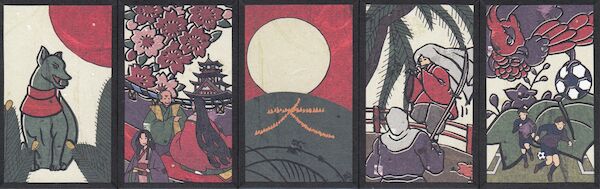
© George Pollard🅭🅯🄏🄎
The Kyōto Hanafuda’s 5 Brights, showing icons and landmarks of Kyōto. From left to right they represent: a fox with a jewel in its mouth, from the gate of the Fushimi Inari shrine (伏 見稲荷大社); Toyotomi Hideyoshi (豊臣秀吉), Kita no Mandokoro ( 北政所), and Yodogimi (淀君) at Fushimi Castle (伏見城 ); the character 大 (dai, ‘large’), which is lit on fire on mount Daimonji (大文字山) during the festival of Gozan no Okuribi (五山送り火, ‘five mountain fire’); the warrior monk Benkei (弁慶) meeting Minamoto no Yoshitsune (源義経), who is playing the flute, at Gojō bridge (五条橋); and the Kyōto Sanga (京 都サンガ) football club, whose logo contains the Chinese/Japanese phoenix that is normally featured on the Paulownia bright card.
In conjunction with Ganzofutonekodō (元祖ふとねこ堂), they produced Hananekofuda (花猫札), featuring Japanese cats:
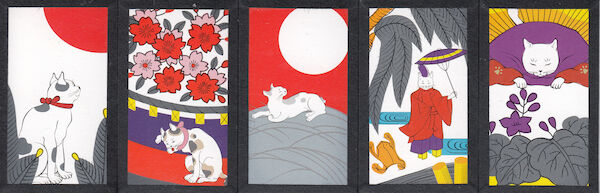
© George Pollard🅭🅯🄏🄎
 Angel (エンゼル enzeru)
© George Pollard🅭🅯🄏🄎
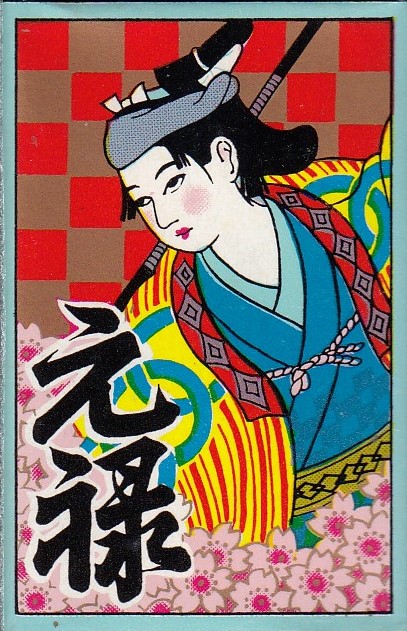
Angel’s Genroku packaging (1970s, the current packaging is different).
© George Pollard🅭🅯🄏🄎
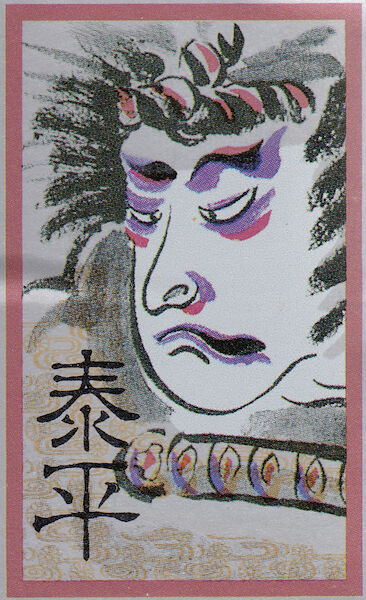
The Taihei packaging.
© George Pollard🅭🅯🄏🄎
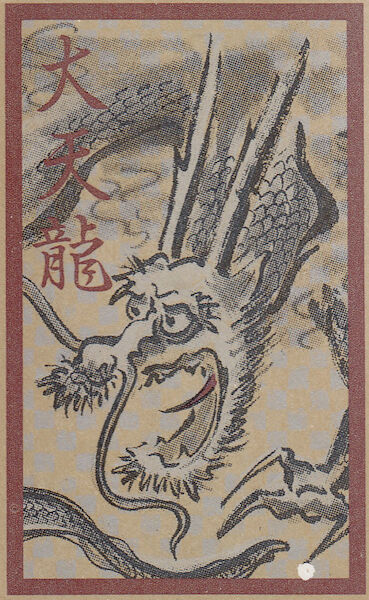
The Daitenryū packaging.
Angel was originally named Okina Karuta Honpo (翁かるた本舗), and was first based in the city of Yōkaichi (now Higashiōmi), Shiga prefecture (滋賀県八日市市). It is now based in Kyōto. They still use the character 翁 (okina) as their maker’s mark, or otherwise the name Angel is written エンゼル. On some cards this is spelled 縁是留.
Angel currently produces Hanafuda and Kabufuda in two brands:
千鳥 (chidori ‘numerous birds’)
元禄 (Genroku, an era which spanned 1688–1704)
Historical brands include:Hatton, ‘Modern Japanese Wrappers’, 45.
玉将 (gyokushō, ‘king of the lesser player’, a Shōgi term)
翁 (okina, ‘old man’, the name of a special ritual Noh play)
泰平 (taihei, ‘tranquility’)
纏 (matoi, ‘fireman’s standard’), also used for Kabufuda
旅 (tabi, ‘trip’)
大天龍 (daitenryū ‘great Tenryū’)
Angel also produces cardboard novelty hanafuda for brands like Disney and Hello Kitty, and both HyakuninIsshu and Iroha Karuta.
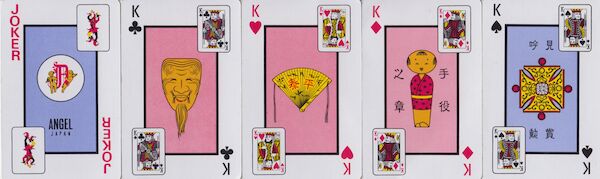
At one point they produced a Hana-Trump deck with similar construction to that of Nintendō’s (above).
© George Pollard🅭🅯🄏🄎
The extra cards of Angel’s “Hana-Trump” deck.
 Tamura Shōgundō (田村将軍堂)

The yaguruma is a windmill-like device of arrows arranged in a wheel and allowed to rotate in the wind. They are associated with festivals, particularly the May 5th Tango no Sekku festival, where they are placed on top of tall poles from which koi streamers are flown.
A small manufacturer, founded in 1921. Unlike other manufacturers, their mark is not a standard kanji-shape combination, but instead a stylized depiction of a yaguruma ( 矢車, ‘arrow wheel’). They have also published Harifuda and Shirofuda (blank cards) under the mark ㊀ (circled 一). They currently produce Hyakunin Isshu, Manyo Karuta, and Hanafuda.
Most of Tamura Shōgundō’s cards are produced with hand-wrapped backing paper; they have another web page that details their manufacturing process.
Tamura manufactures two types of Hanafuda cards; firstly the standard pattern, with brands (these have been maintained since the 1970s):Ibid., 39.
紫宸殿 (Shishinden, the ceremonial hall of Kyōto Imperial Palace)
大将軍 (daishōgun, ‘general’), also used for Kabu, Tehonbiki, Shiro (blank) cards
満点 (manten, ‘perfect score’), also Kabufuda
栄光 (eikō, ‘glory’), also Kabufuda
京乃錦 (Kyō no nishiki, ‘brocade of Kyōto’, indicating the autumn leaves)
花くらべ (hanakurabe, ‘comparing flowers’)
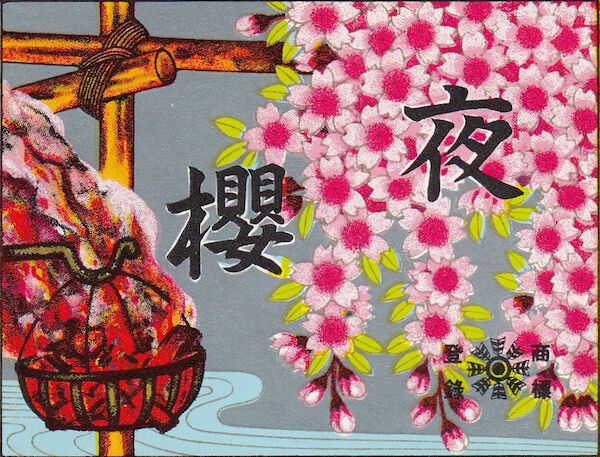
夜櫻 (yozakura, ‘evening cherry blossoms’)
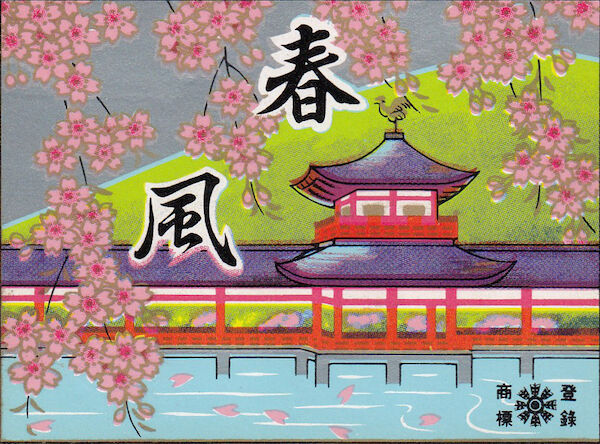
春風 (harukaze, ‘spring breeze’), also used for Kabufuda
花あそび (hanaasobi, ‘flower playing’), no longer in use as of 2019
世界長 (sekaichō, ‘world leader’), no longer in use as of 1980
宝玉 (hōgyoku, ‘jewel’), no longer in use as of 1980
将軍 (shōgun, Shogun), used for Tehonbiki only
総帥 (sōsui, ‘commander-in-chief’, depicting the Duke of Wellington (ウエリントン)), no longer in use as of 1980
© George Pollard🅭🅯🄏🄎
Tamura Shōgundō’s yozakura wrapper. This is an outer-box wrapper designed to contain two decks.
© George Pollard🅭🅯🄏🄎
Tamura Shōgundō’s harukaze wrapper. This is an outer-boxed wrapper designed to contain two decks; a wrapper for the individual deck can be seen above.
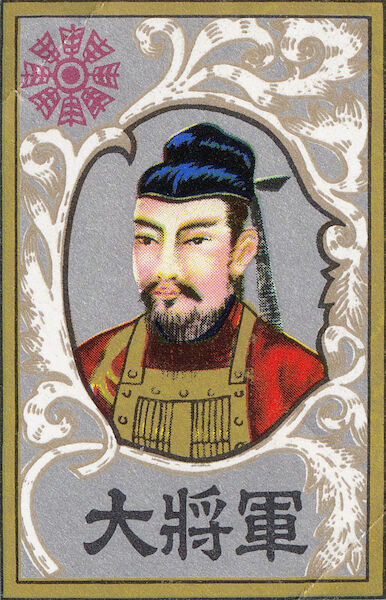
© George Pollard🅭🅯🄏🄎
Tamura Shōgundō’s daishōgun wrapper.
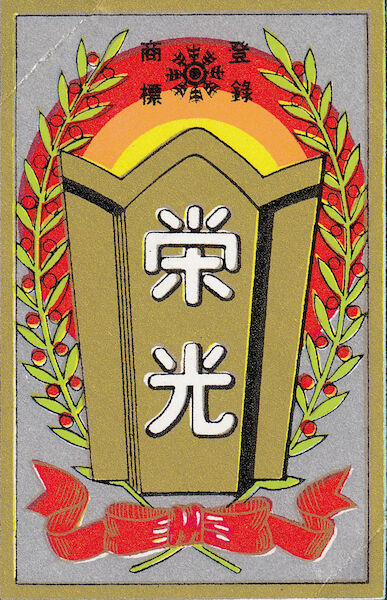
© George Pollard🅭🅯🄏🄎
Tamura Shōgundō’s eikō wrapper.
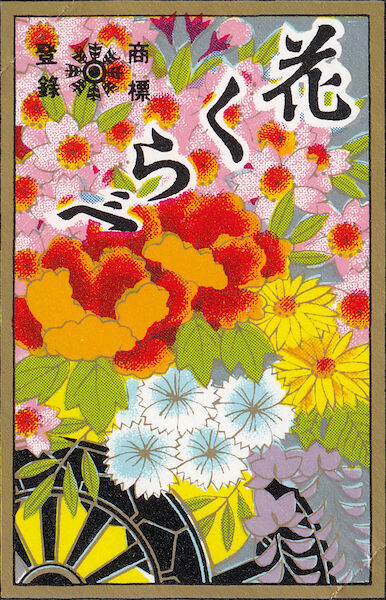
© George Pollard🅭🅯🄏🄎
Tamura Shōgundō’s hanakurabe wrapper.
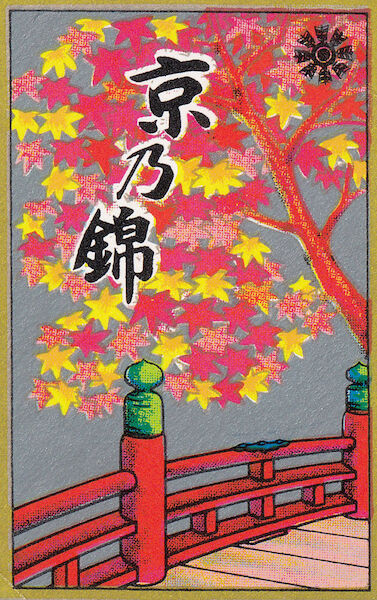
© George Pollard🅭🅯🄏🄎
Tamura Shōgundō’s kyō no nishiki wrapper.
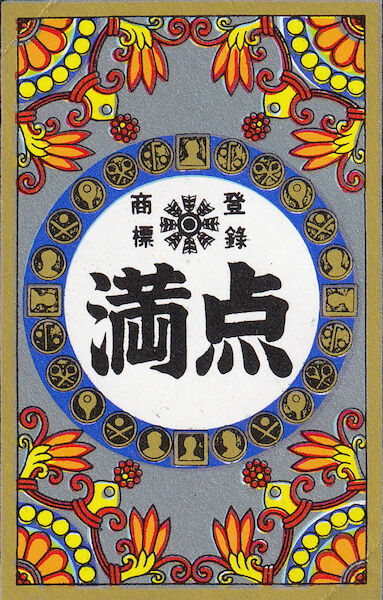
© George Pollard🅭🅯🄏🄎
Tamura Shōgundō’s manten wrapper.
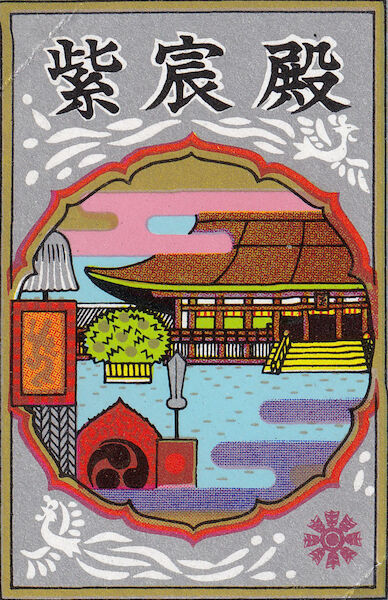
© George Pollard🅭🅯🄏🄎
Tamura Shōgundō’s Shishinden wrapper.
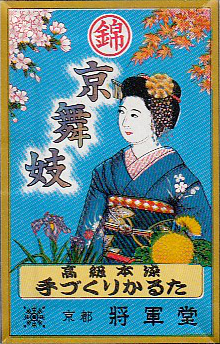
© George Pollard🅭🅯🄏🄎
Tamura Shōgundō’s Kyō maiko brand.
They also print a revised pattern, Nishiki (錦), which is larger and has a squarer format than standard cards, and is printed with more, bolder colours. This is sold under brands:
京舞妓 Kyō maiko, ‘Kyōto maiko’ (an apprentice geisha)
祇園茶屋 Gion chaya, ‘Gion teahouse’ (a district of Kyōto)
にしき花かるた Nishiki hana karuta, ‘Nishiki flower cards’
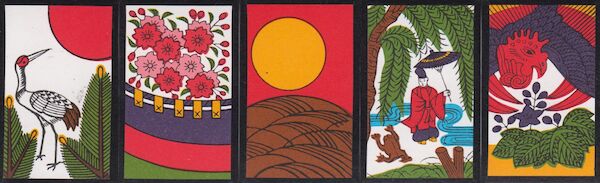
© George Pollard🅭🅯🄏🄎
The 5 Brights of the Nishiki pattern.
Extinct Manufacturers
The following manufacturers were once producers of Hanafuda cards but have since ceased production. Many of their decks can still be found circulating.
 Matsui Tengudō (松井天狗堂)
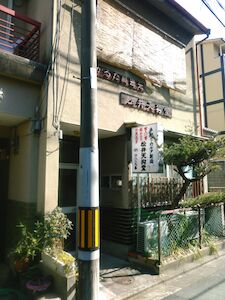
The Matsui Tengudō store as it appeared in 2017, 7 years after shutting down.
Matsui Tengudō was founded in KyōtoThere was also an Ōsaka-based Matsui Tengudō, started by the younger brother of Matsui Shigejiro, which had actually opened before the Kyōto branch. It used the same manufacturer’s mark and existed in 1914 (商工社, 日本全国商工人名録 (1914), 219) but closed after the second generation. in 1897 by Matsui Shigejiro (松井重次郎), and was run by the Matsui family for three generations until it closed in 2010 after Matsui Shigeo (松井重夫 , 1931–2016) retired.Iwano Art Co., ‘松井天狗堂の買取致します’ (2017).
Matsui Tengudō was the last manufacturer to make cards entirely by hand;Rebecca Salter, ‘Game over: the last days of hand-made Japanese playing cards’ (2008). Matsui Shigeo had recovered this process in 1976 as a way to distinguish his cards from those being produced by other manufacturers, after a former teacher of his told him to “make something that doesn’t exist anywhere”.村上健司, 手わざの記憶 (2009).
Since closing, Matsui Tengudō decks now fetch high prices on Yahoo! Auctions, often selling for several hundred US dollars.
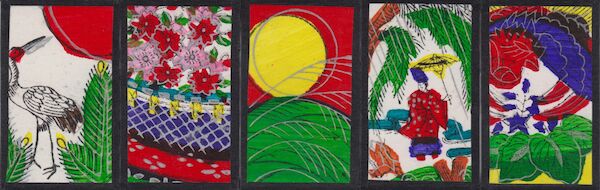
© George Pollard🅭🅯🄏🄎
The 5 Bright cards from a deck produced by Matsui Shigeo to demonstrate his printing technique (1978). This deck was produced as part of a demonstration for members of the International Playing Card Society.
Matsui’s mark was 松 in a square.
Known brands produced were:
鳳凰 (hōō, the Japanese phoenix)
龍虎 (ryū ko, ‘dragon and tiger’), also used for Kabu, Tehonbiki, and Komaru cards
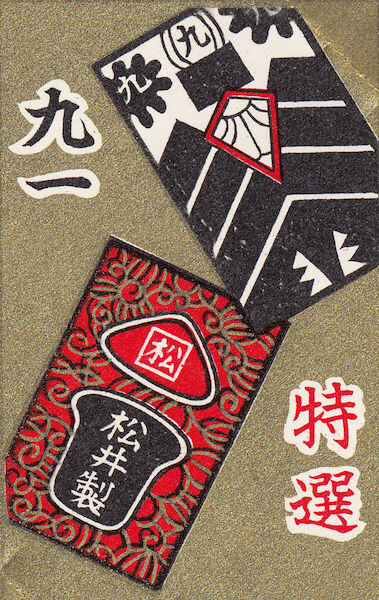
九一 (kuppin, ‘nine and one’, the highest combination in Kabufuda games), used for Kabu cards only
金龍󠄁 (kinryū, ‘gold dragon’), used for Komaru cards only
菊華 (kikka, ‘chrysanthemum’)
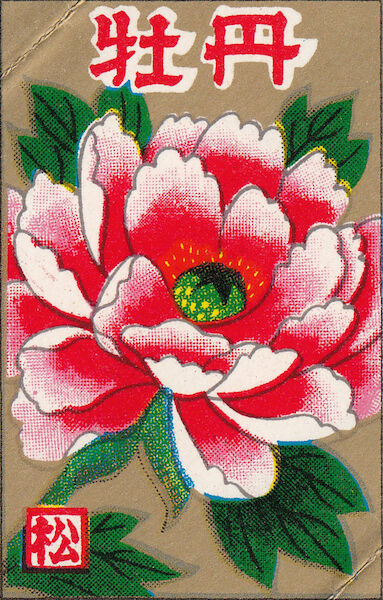
牡丹 (botan, ‘peony’)
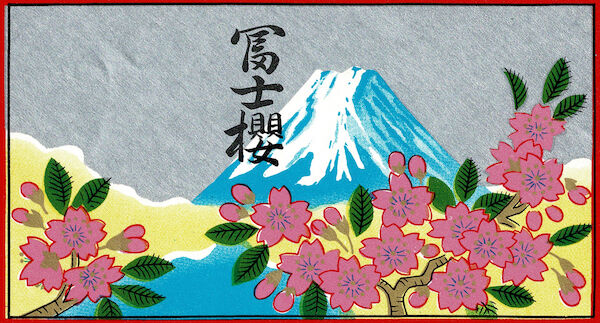
冨士櫻 (fujizakura, ‘Fuji cherry blossoms’), also used for Kabufuda
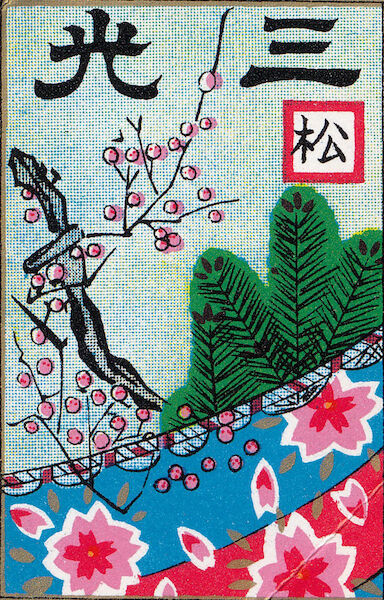
三光 (sankō, ‘three brights’)
© George Pollard🅭🅯🄏🄎
The botan wrapper.
© George Pollard🅭🅯🄏🄎
The sankō wrapper.
© George Pollard🅭🅯🄏🄎
The kuppin wrapper.
© George Pollard🅭🅯🄏🄎
The fujizakura wrapper.
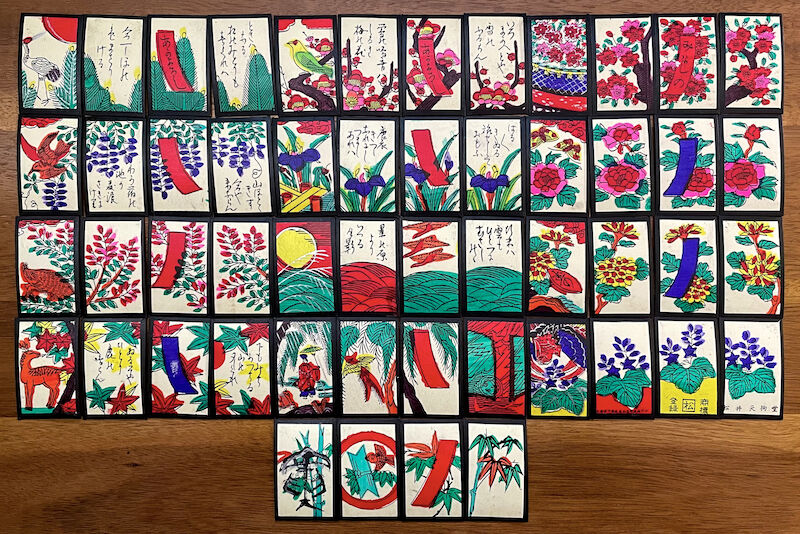
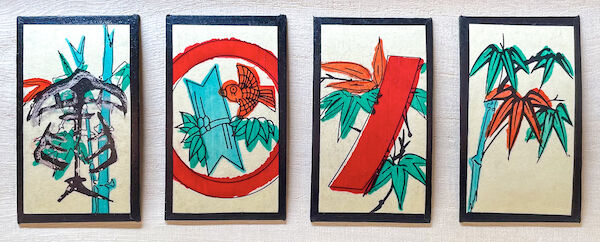
Matsui also produced custom extended Hanafuda decks with 13 and 14 months, which can be used to play games with more people. The 13-month deck features bamboo as the additional suit, while the 14-month deck has both bamboo and lotus.
© 2021 Louie Mantiaused with permission
All the cards from Matsui Tengudō’s 13-month deck.
© 2021 Louie Mantiaused with permission
The bamboo cards from the 13-month deck. From left-to-right they are: a sixth Bright card featuring the kanji for “tiger” (寅), a tane card with a sparrow, a tanzaku card, and a kasu card.
Ace (エース ēsu)
Ace was a manufacturer based in Kyōto. Their brands included:Hatton, ‘Modern Japanese Wrappers’, 44.
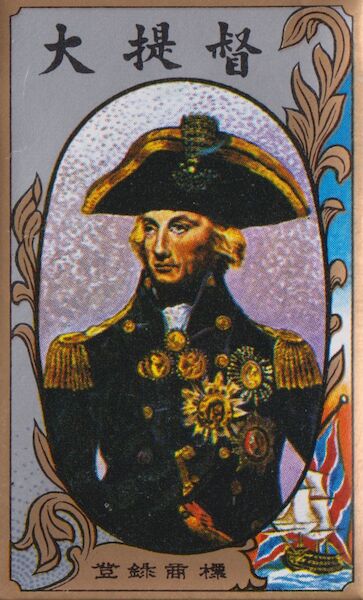
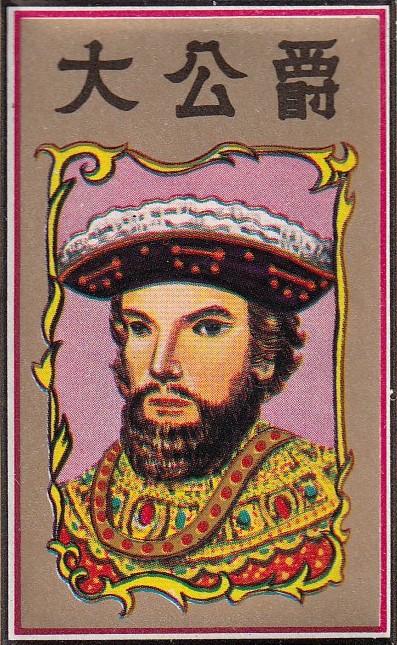
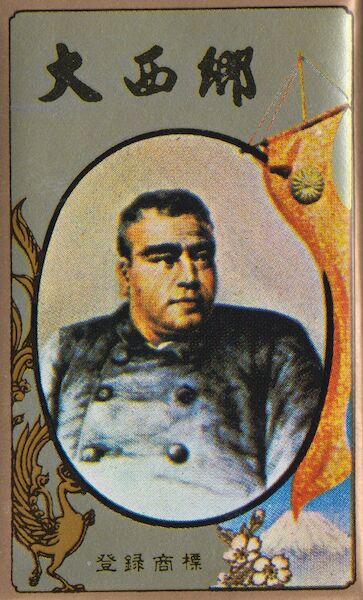
大公爵 (daikōshaku, ‘grand duke’, also used for Kabufuda)
大西郷 (daisaigō, ‘great Saigō’)
エース (ēsu, also used for Kabufuda)
大提督 (daiteitoku, ‘grand admiral’, featuring a picture of Horatio Nelson)
大勝利 (daishōri, ‘huge win’, featuring a picture of Tōgō Heihachirō)
紅葉 (momiji, ‘autumn leaves’)
源氏 (genji, ‘Genji’)
金鶏 (kinkei, ‘golden pheasant’)
日本光 (nihon hikari, ‘light (of) Japan’, i.e. Fuji)
祇園桜 (gionzakura, ‘Gion cherries’)
聖徳太子 (Shōtoku Taishi, ‘Prince Shōtoku’)
白梅 (hakubai, ‘white plum’)
They also made two all-plastic Hanafuda decks: 金花 (kin-hana ‘gold flowers’) and 銀花 (gin-hana ‘silver flowers’).
 Maruē (マルエー)
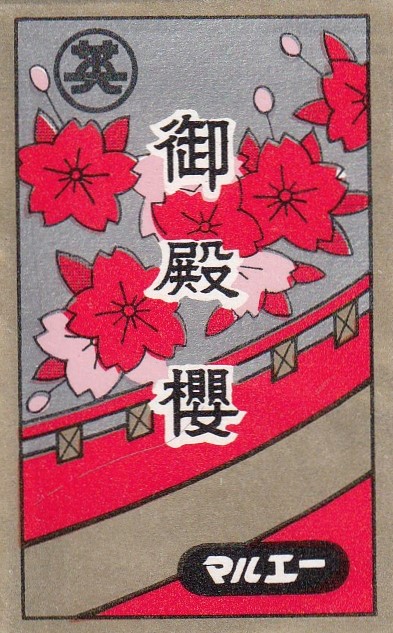
Maruē was from the city of Mino, in Gifu prefecture (岐阜県美濃市). Their manufacturer’s mark was a circled 英 (ē), i.e. maru-ē. However, 英 has the meaning of ‘flower’ and can also be read with the same pronunciation as 花 hana, making this mark very punny.
© George Pollard🅭🅯🄏🄎
Packaging for Maruē’s Goten Sakura brand (1970s).
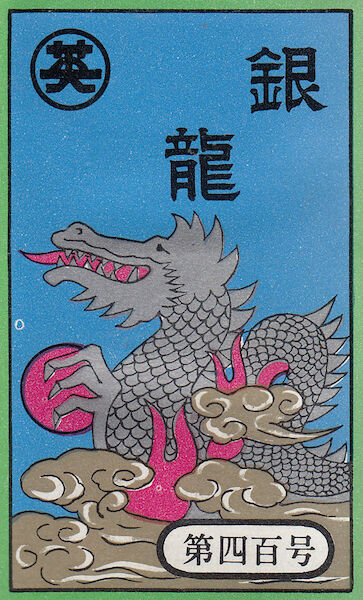
© George Pollard🅭🅯🄏🄎
Wrapper for the Ginryū brand.
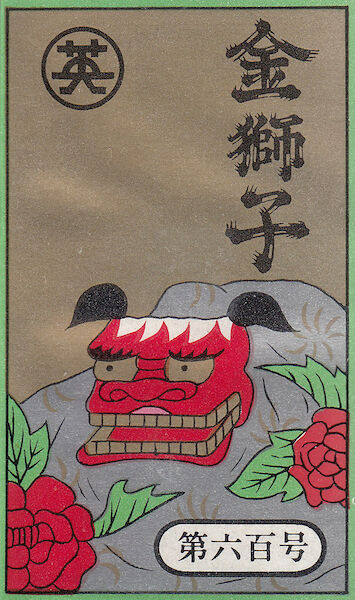
© George Pollard🅭🅯🄏🄎
Wrapper for the Kinjishi brand.
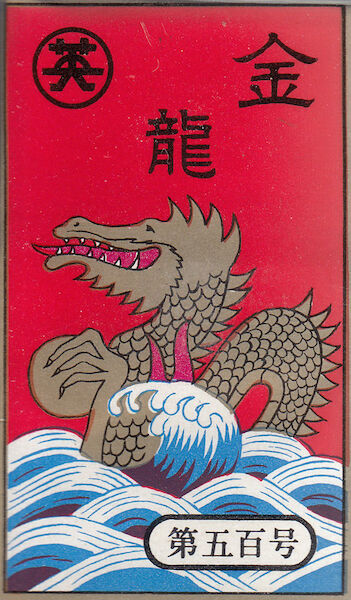
© George Pollard🅭🅯🄏🄎
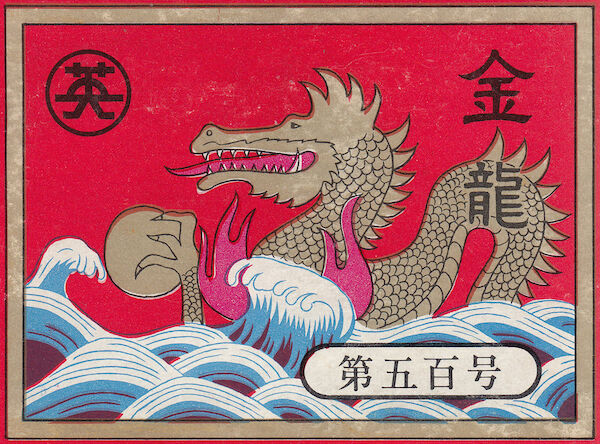
Wrapper for the Kinryū brand.
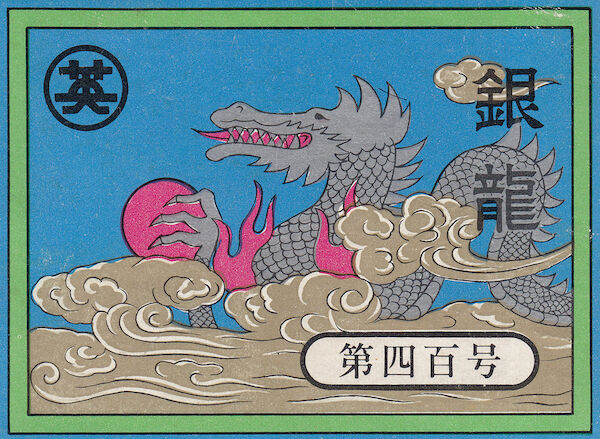
© George Pollard🅭🅯🄏🄎
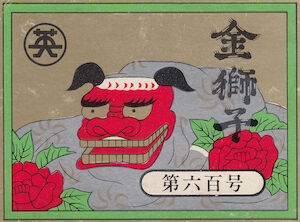
Box for the Kinjishi brand.
Brands produced by Maruē included:Ibid., 52.
東洋一 (tōyōichi, ‘best in the East’), also used for Kabufuda
金獅子 (kinjishi, ‘gold lion’), also used for Kabufuda and Tehonbiki cards
金龍 (kinryū, ‘gold dragon’)
銀龍 (ginryū, ‘silver dragon’), also used for Kabufuda
御殿櫻 (gotenzakura, ‘palace cherry blossoms’)
夜櫻 (yoruzakura ‘evening cherry blossoms’)
梅の花 (ume no hana ‘plum flowers’)
秀吉 (hideyoshi ‘Hideyoshi’)
 Tanaka Gyokusuidō (田中玉水堂)
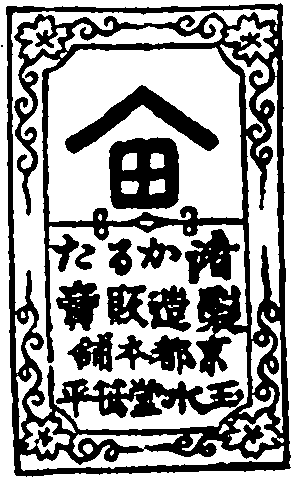
Tanaka Gyokusuidō’s trademark, registered on the 16th of October 1893 by Tanaka Heibe (田中平兵衛) (東京書院, 日本登録商標大全. 第六編, 65).
Tanaka Gyokusuidō was founded around 1893, and existed in Kyōto through 1914 (when it was run by Tanaka Haru 田中ハル),商工社, 日本全国商工人名録 (1914), 151. and 1948,山口泰彦, 最後の読みカルタ (1998), 102. but had stopped producing in the early 1960s.Hatton, ‘Modern Japanese Wrappers’, 33. Their brands (including Fukusuke and Ginsuehiro) and manufacturer’s mark were taken over by Iwata Honten.Ibid., 48–59.
© George Pollard🅭🅯🄏🄎
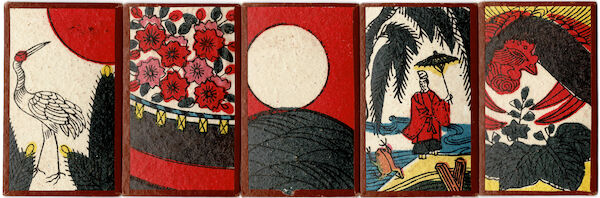
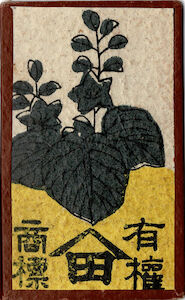
Five Brights from a Tanaka Gyokusuidō deck.
© George Pollard🅭🅯🄏🄎
Tanaka Gyokusuidō’s maker’s mark.
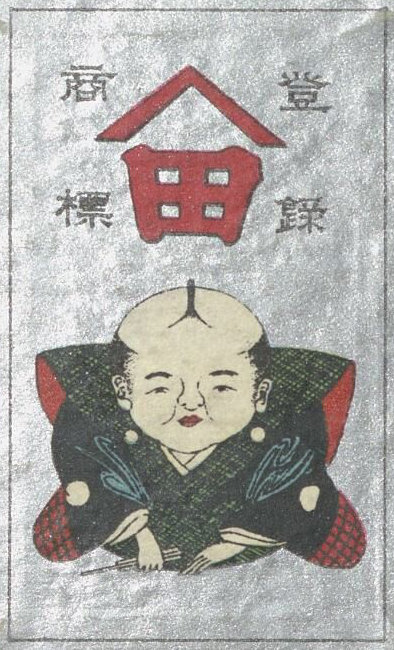
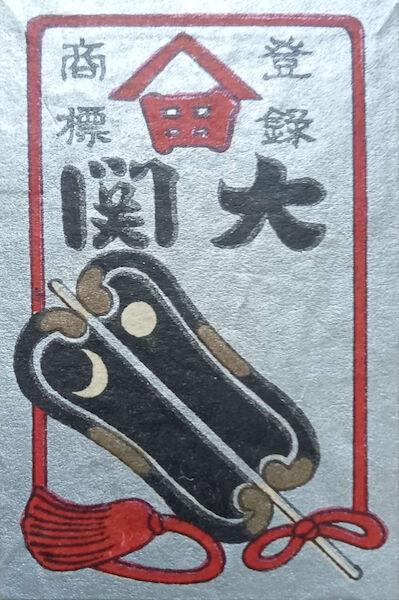
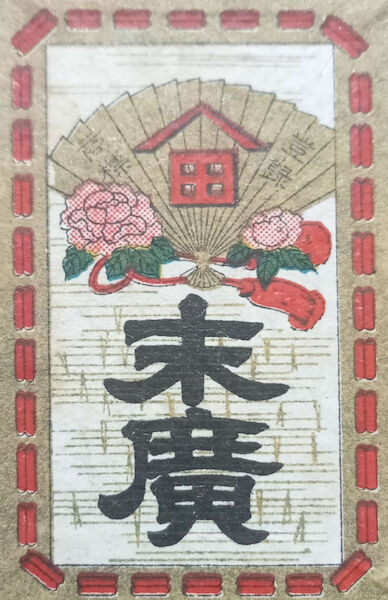
Their maker’s mark was 田 with corner on top, and brands included:
福助 (fukusuke, a large-headed good luck doll)
銀末廣/銀末広 (ginsuehiro ‘silver fan’)
末廣 (suehiro ‘fan’)
大帝王 (daiteiō ‘great emperor’)
春 (haru, ‘spring’)
横綱 (yokozuna, the highest rank in sumo)
大関 (ōzeki, the second-highest sumo rank)
高徳 (Takanori, Takanori Kojima, a warrior famous for inscribing a poem of loyalty to the emperor onto a cherry tree)
花扇 (hanaōgi, ‘flower fan’)
金剛 (kongō, a mythical indestructible substance)
よろしい (yoroshii, ‘all right’), trademarked in 1947
達磨 (daruma, Daruma)
黄 (ki, ‘yellow’)
白 (shiro, ‘white’)
小判 (koban, a large coin)
Iwata Honten (岩田本店)
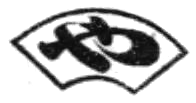
Iwata Honten’s trademark, registered on the 27th of February 1918 by Iwata Yoshinosuke ( 岩田芳之助) (東京書院, 日本登録商標大全. 第11輯 下, 330).
Iwata was founded around 1918. They did not make their own cards but had them made by other manufacturers, including Tamura Shōgundō, Nintendō, and Nihon Karuta. Their mark was や in a fan shape.
Brands included:Ibid., 48.
福助 (fukusuke, a large-headed good luck doll)
銀末廣/銀末広 (ginsuehiro ‘silver fan’)
小判 (koban, a type of coin), manufactured by Nintendō
雪月花 (setsugetsubana ‘snow, moon, and flowers’), manufactured by Nintendō
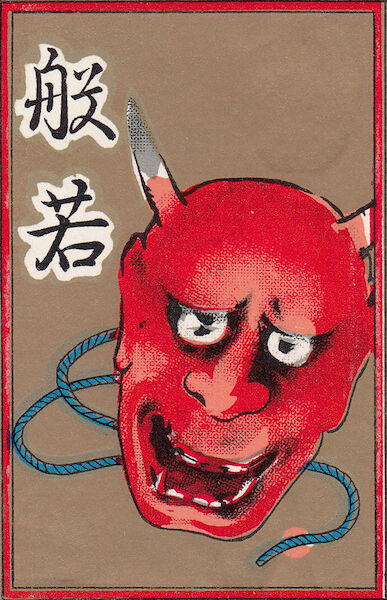
般若 (hannya, a noh mask representing a horned female demon), manufactured by Nihon Karuta
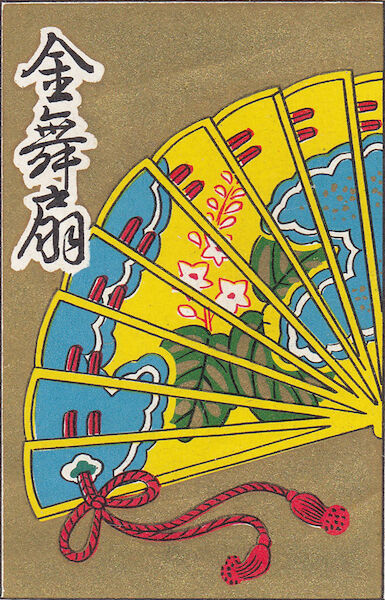
金舞扇 (kinmaiōgi, ‘gold dancer’s fan’), (probably) manufactured by Nihon Karuta
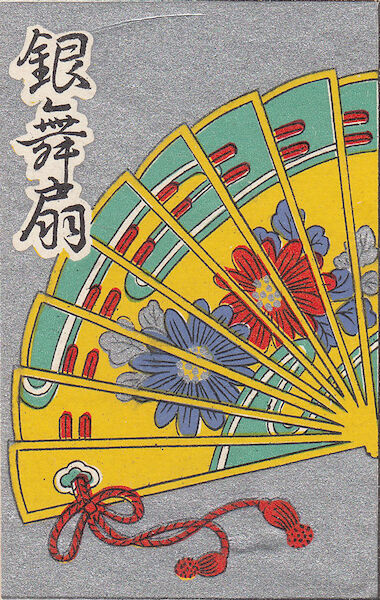
銀舞扇 (ginmaiōgi, ‘silver dancer’s fan’), (probably) manufactured by Nihon Karuta
 Nihon Karuta Seizō (日本骨牌製造) & Tamada Fukushōdō (玉田福勝堂)
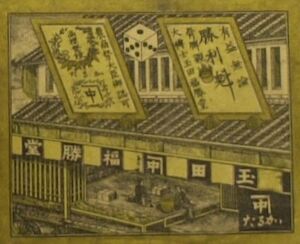
A Tamada Fukushōdō box depicting a storefront, from the collection of Lady Charlotte Schreiber, bequeathed to the British Museum in 1895. (This deck is briefly described in Catalogue of the collection of playing cards bequeathed to the Trustees of the British museum by the late Lady Charlotte Schreiber (184), under ‘Japanese #2’.)
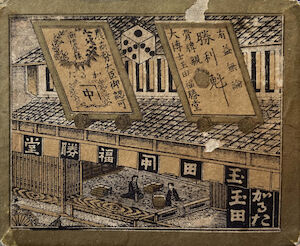
Another version of the storefront box, from the WCPCM collection.
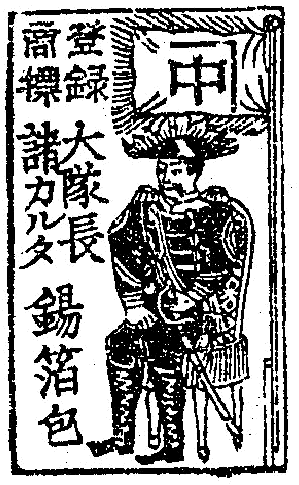
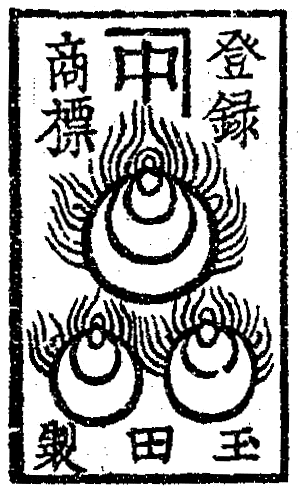
Some early Tamada trademarks, registered in 1899 by Tamada Yasunosuke (玉田安之助 ) (東京書院, 日本登録商標大全. 第六編, 66).
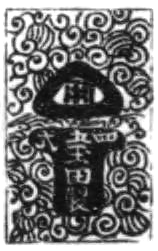
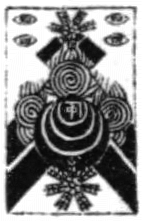
Earliest Nihon Karuta trademarks, registered in 1915 (東京書院, 日本登録商標大全. 第8輯 下, 295).
The mark of both of these companies was 中 with corner at top-right.
Nihon Karuta claimed to have been founded in 1806.村上, 手わざの記憶. It is hard to prove this, but an earlier company named Tamada Fukushōdō that used the same manufacturer’s mark had definitely existed in Kyōto since before 1895 (see image). It is unclear precisely what the relationship was between the two companies, but Nihon Karuta advertised their decks as being in the “Tamada style” (玉田式), and certainly the patterns they printed were very similar. Nihon Karuta decks also often have the Tamada name printed on their branding cards. A safe guess would be that Nihon Karuta was a rebranding or expansion of the original Tamada Fukushōdō name, either to reflect the scope of a larger company or to project its ambitions.
Nihon Karuta itself seems to have been founded in 1915, as this is when its earliest trademark registrations appear.東京書院, 日本登録商標大全. 第8輯 下, 295. Other records show that it existed in 1916,商工社, 日本全国商工人名録 (1916), 135. 1948山口, 最後の読みカルタ, 102. and through to at least the early 1980s.Hatton, ‘Modern Japanese Wrappers’, 54.
Brands of both companies have included:Ibid., 54–5.
花の王 (hana no ō, ‘queen of flowers’, the Cattleya)
七福神 (shichi fukujin, the Seven Lucky Gods)
大隊長 (daitaichō, ‘battalion commander’)
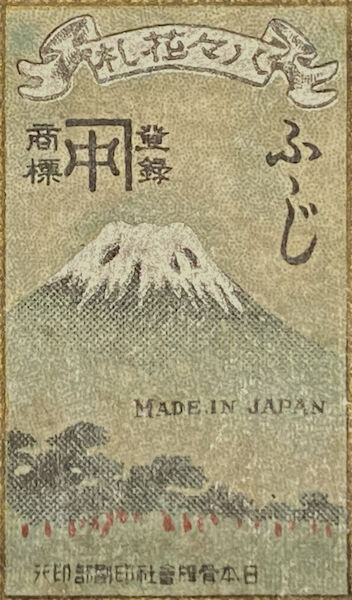
ふじ (fuji, ‘Fuji’)
四光 (shikō, ‘four brights’)
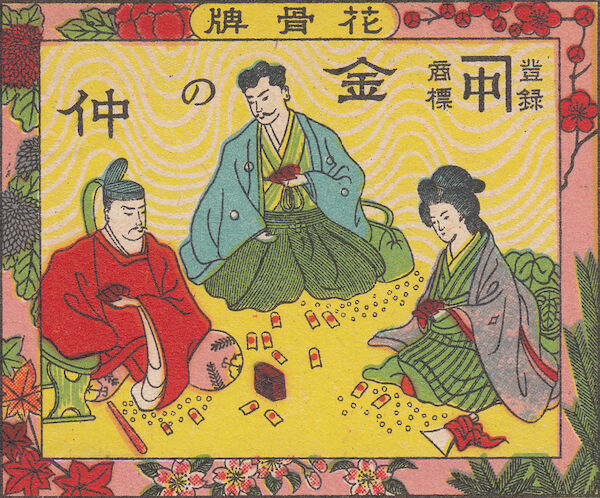
金の仲 (kane no naka, ‘golden relationship’, a reference to the trademark pronounced kane-naka), trademarked by NK in 1919東京書院, 日本登録商標大全. 第14輯 下 (1922), 242.
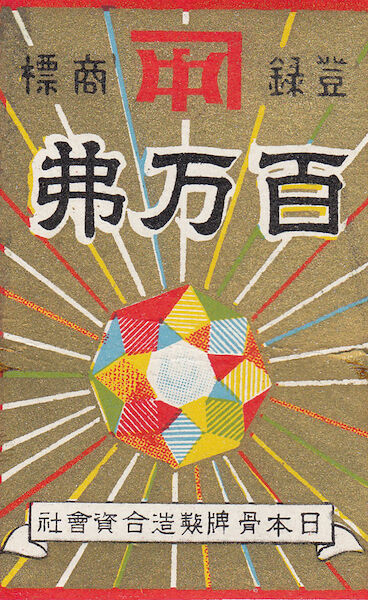
百万弗 (hyakumandoru, ‘a million dollars’)
天狗 (tengu, Tengu)
万両 (manryū, ‘10 000 coins’), trademarked by NK in 1919Ibid.
千両 (senryū, ‘1000 coins’)
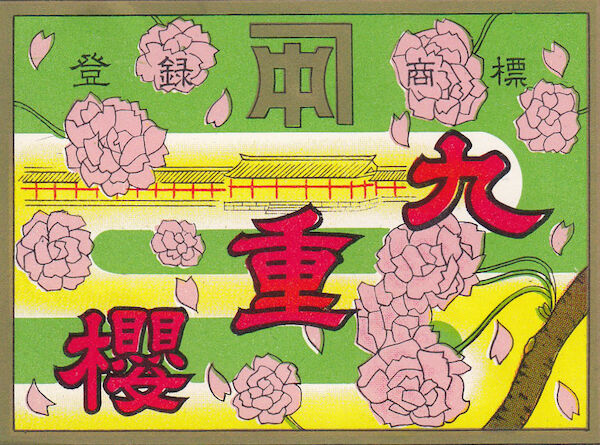
九重櫻/九重さくら (kokonoezakura, ‘Kokonoe cherry blossoms’)
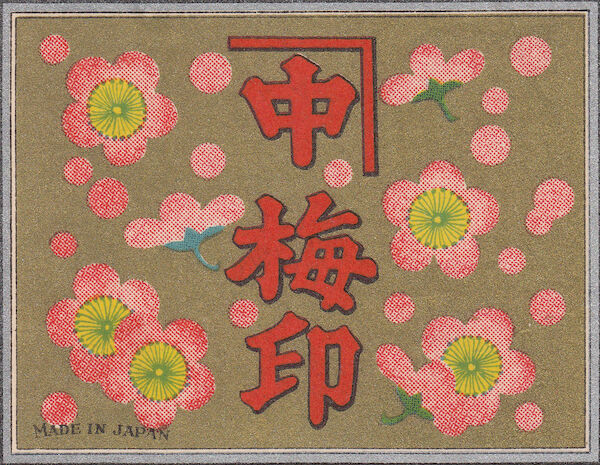
梅印 (umejirushi ‘plum brand’)
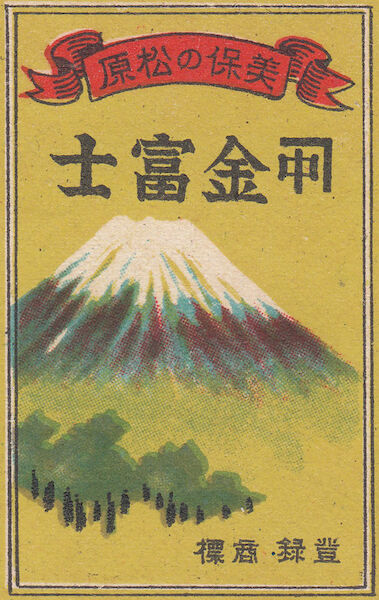
金富士 (kinfuji ‘gold Fuji’)
御所車 (goshoguruma ‘ox-drawn coach’)
金鷲 (kinshū ‘golden eagle’)
雲龍 (unryū ‘cloud dragon’), trademarked by NK in 1919Ibid., 241.
金龍 (kinryū ‘golden dragon’), trademarked by NK in 1919Ibid., 242.
金世界 (kinsekai, ‘gold world’), trademarked by NK in 1919Ibid.
大入 (ōiri, ‘full house’, a theatre term), trademarked by NK in 1919Ibid.
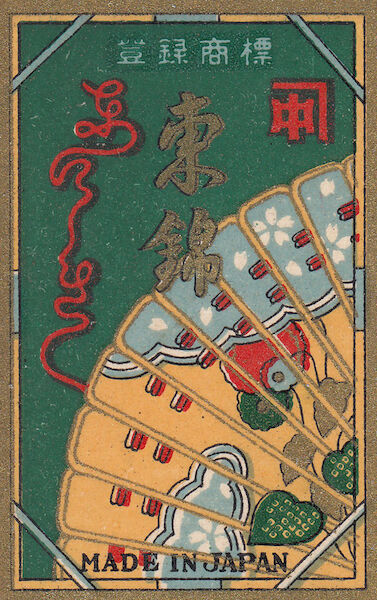
東錦 (higashinishiki, ‘eastern brocade’), trademarked by NK in 1919Ibid.
萬國一/万国一 (bankokuichi, ‘best in the world’), trademarked by NK in 1919Ibid.
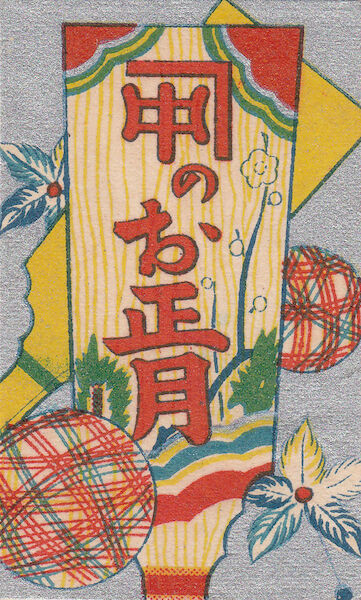
- のお正月 ([nihon karuta] no oshōgatsu, ‘Nihon Karuta’s new year’)
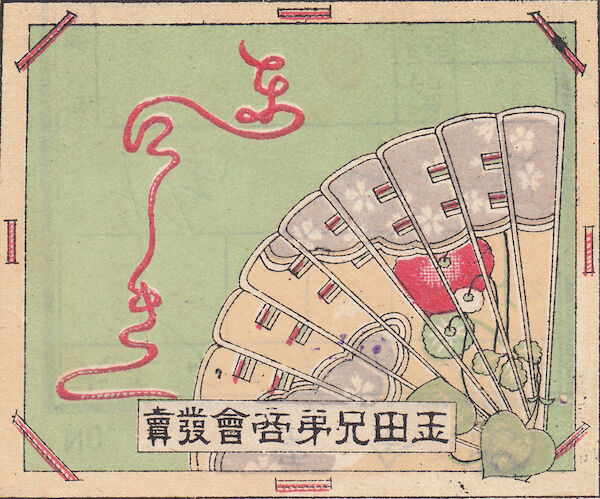
© George Pollard🅭🅯🄏🄎
Tamada Fukushōdō’s higashinishiki box.
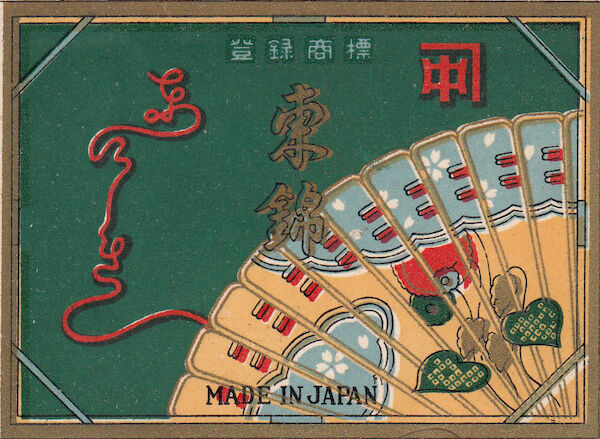
© George Pollard🅭🅯🄏🄎
Nihon Karuta’s higashinishiki box.
© George Pollard🅭🅯🄏🄎
The kane no naka box.
© George Pollard🅭🅯🄏🄎
The inner higashinishiki wrapper, for a single deck.
© 2021 琴比良哲used with permission
The fuji wrapper.
© George Pollard🅭🅯🄏🄎
The kinfuji wrapper.
© George Pollard🅭🅯🄏🄎
The hyakumandoru wrapper.
© George Pollard🅭🅯🄏🄎
The oshōgatsu wrapper.
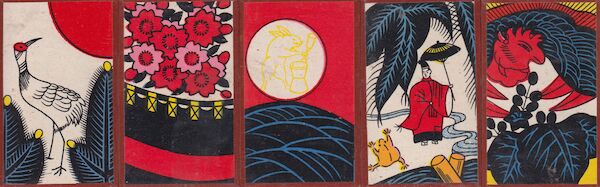
Nihon Karuta’s standard pattern was a variation on the Hachihachibana which included more detailing in the form of fine blue lines. The standout feature was the full moon card, which featured a rabbit pounding mochi in the moon:
© George Pollard🅭🅯🄏🄎
The bright cards of Nihon Karuta’s special pattern.
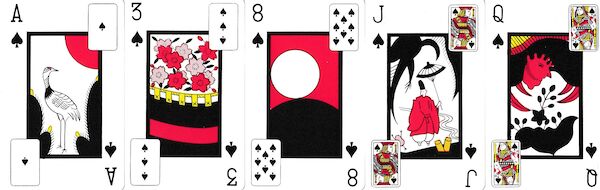
Under the brand name of “Wind Mill”, Nihon Karuta have also produced Western-style playing cards, including their own Hana-Trump deck:
© George Pollard🅭🅯🄏🄎
The bright cards of Nihon Karuta’s Hana-Trump deck. These are obviously based on the much older Universal Trump-Hana deck.
© George Pollard🅭🅯🄏🄎
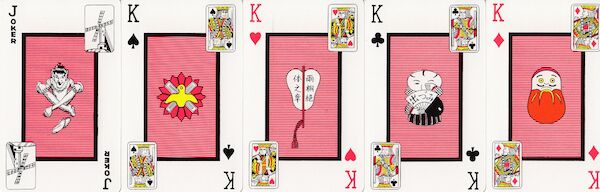
The extra Hachi-Hachi-related cards of Nihon Karuta’s Hana-Trump deck. There is a windmill depicted in the corners of the Joker card.
 Yamashiro Shōten (山城商店)
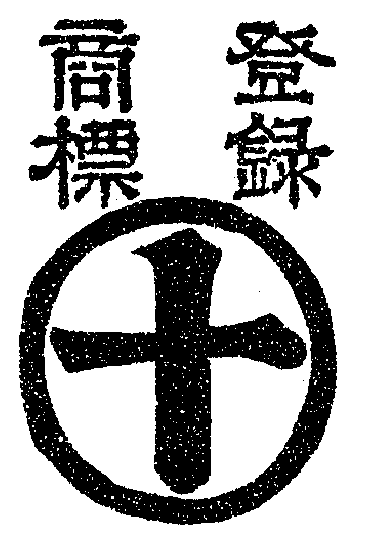
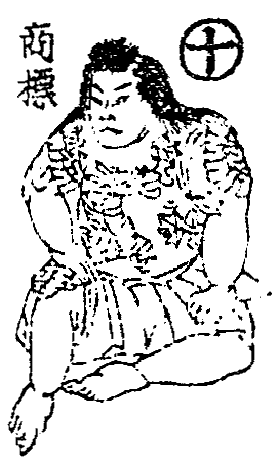
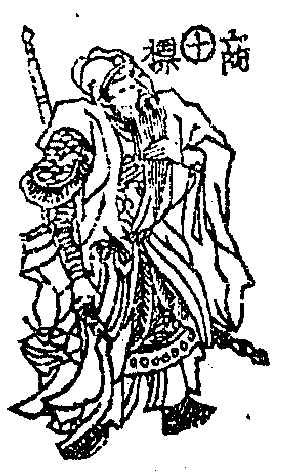
Some of Yamashiro’s trademarks, registered in 1901 & 1902 by Yamashiro Yosaburō (山城與三郎) (東京書院, 日本登録商標大全. 第六編, 66).
A Kyōto manufacturer that existed from at least 1901 through 1948,山口, 最後の読みカルタ, 102. but stopped producing in 1962.Hatton, ‘Modern Japanese Wrappers’, 33. Their manfufacturer’s mark was ㊉ (circled 十). The founder was 山城與三郎 Yamashiro Yosaburō, which was sometimes abbreviated to 山與 Yamayo on printed cards.
In addition to Hanafuda cards, they also produced Kabufuda and Mekuri cards.
Brands of both companies have included:
金坊主 (kinbōzu, ‘gold baldy’, ‘baldy’ being a nickname for a priest)
関羽 (kan’u, Guan Yu), trademarked in 1901東京書院, 日本登録商標大全. 第六編, 67.
九紋竜 (kumonryū, ‘nine-tattoo dragon’, a nickname for ShiJin), trademarked in 1902Ibid.
大黒 (daikoku, Daikokuten)
山猟 (yamasatsu, ‘mountain hunter’)
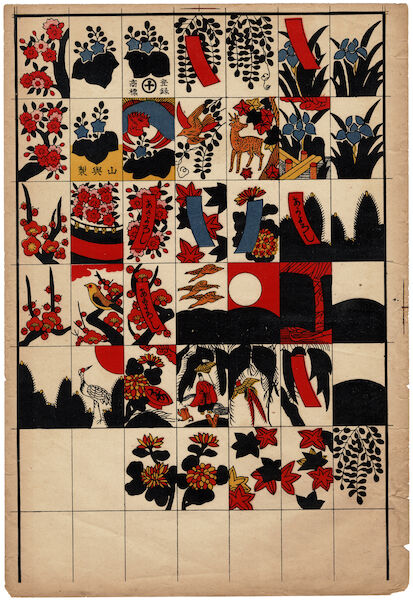
© George Pollard🅭🅯🄏🄎
An uncut sheet of Mushi cards, by Yamashiro.
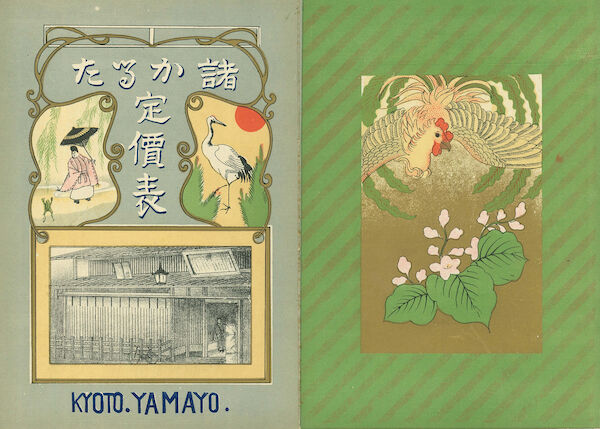
The cover of their pricelist shows a realistic shopfront, of similar construction to Nintendō’s store that is shown in a photo above.
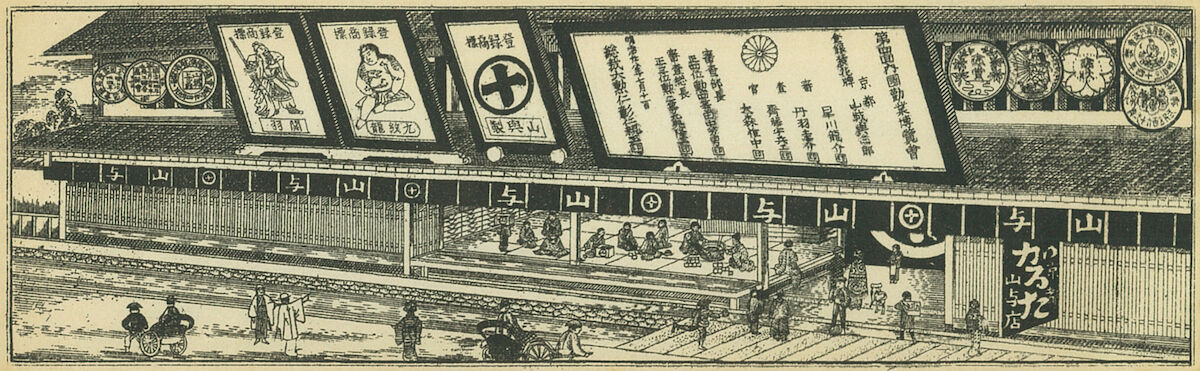
A box wrapper from around 1900 featuring an imaginary depiction of the Yamashiro store exterior; in reality it was nowhere near as large as this. The advertising boards at the left depict Guan Yu and Shi Jin, who represent two of the company’s brands (see trademark images at right).
 Ryūtendō (龍天堂)
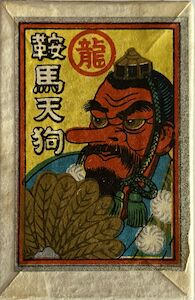
© Ryan Sartorused with permission
The wrapper for Ryūtendō’s kurama kintengu brand.
Existed in Kyōto in 1948;山口, 最後の読みカルタ, 102. their mark was a circled 龍 ryu “dragon” (they also possibly had another trade name of マルナ maruna with circled 名 ‘na’ as mark). Brands included:
龍田川 (tatsutagawa, ‘Tatsuta river’)
天龍 (tenryū, ‘Tenryū’)
龍王 (ryūō, ‘dragon king’)
鞍馬金天狗 (kurama kintengu, ‘Kurama golden tengu’; according to myth, Kurama is the home of the king of the tengu)
福宝 (fukuhō, ‘good fortune, treasure’)
 Inoue Juntendō (井上順天堂)0
Existed in Kyōto in 1948;Ibid. mark was a circled 順.
 Nakao Seikadō (中尾清花堂)
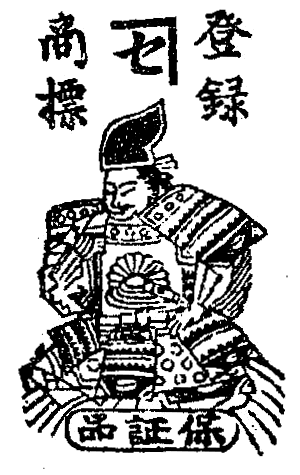
Nakao Seikadō’s trademark, registered on the 12th of July 1894 by Nakao Kiyosuke (中尾清 助) (東京書院, 日本登録商標大全. 第六編, 66).
Founded around 1894, and still existed in Kyōto in 1948. TheirIbid. mark was セ with corner at top-right.
Brands included:
世界長 (sekaichō, ‘world leader’), trademarked in 1921東京書院, 日本登録商標大全. 第18輯 下, 331.
日の出 (hinode, ‘sunrise’)
三日月 (mikazuki, ‘crescent moon’)
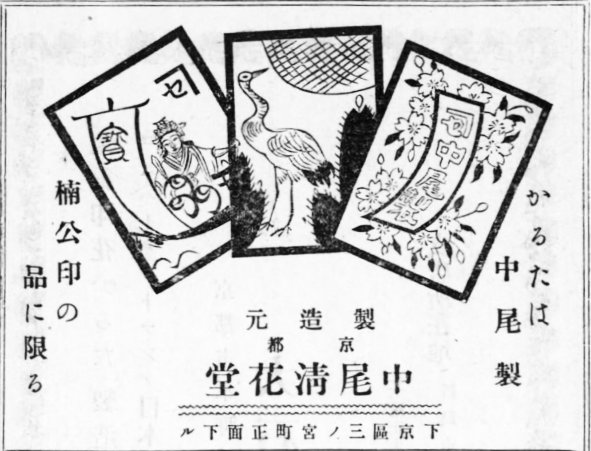
A 1926 advertisement for Nakao Seikadō.
Tsuchida Tenguya (土田天狗屋)

Tsuchida Tenguya’s trademark, registered on the 16th of April 1894 by Tsuchida Tsurumatsu (土田鶴松) (東京書院, 日本登録商標大全. 第六編, 66).
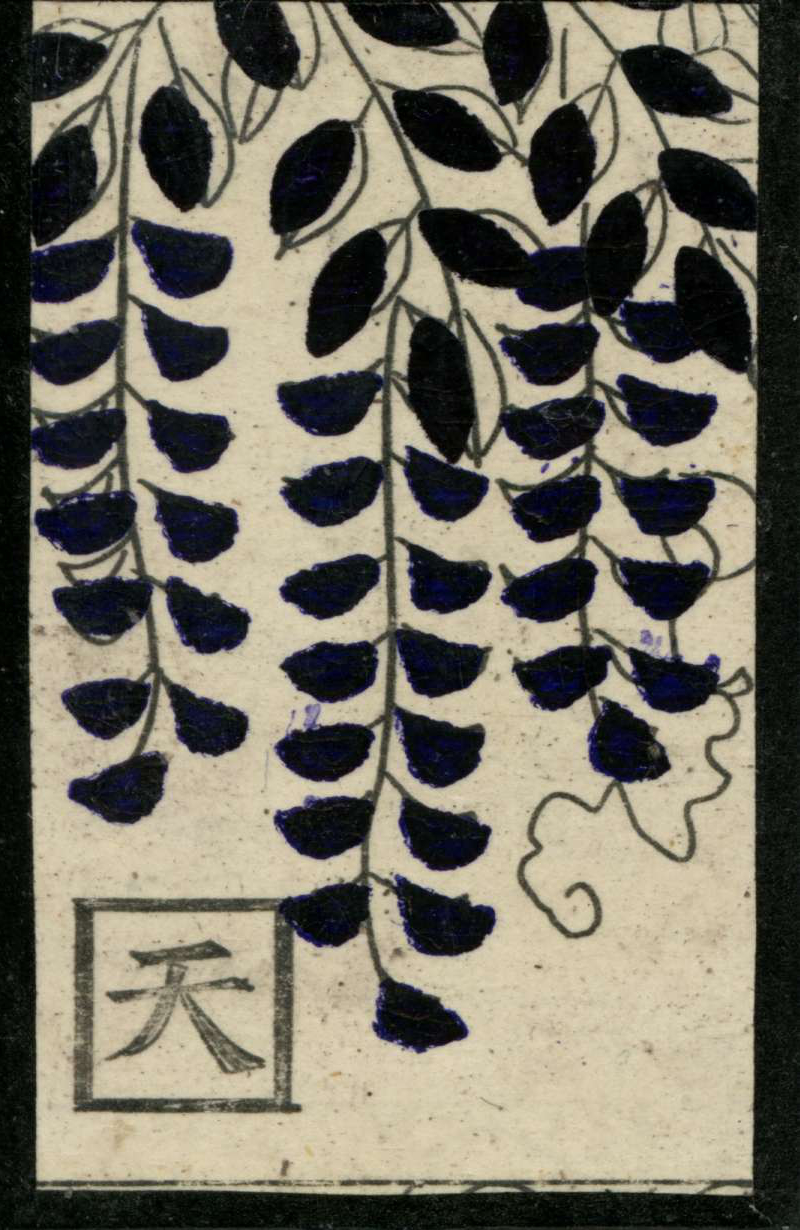
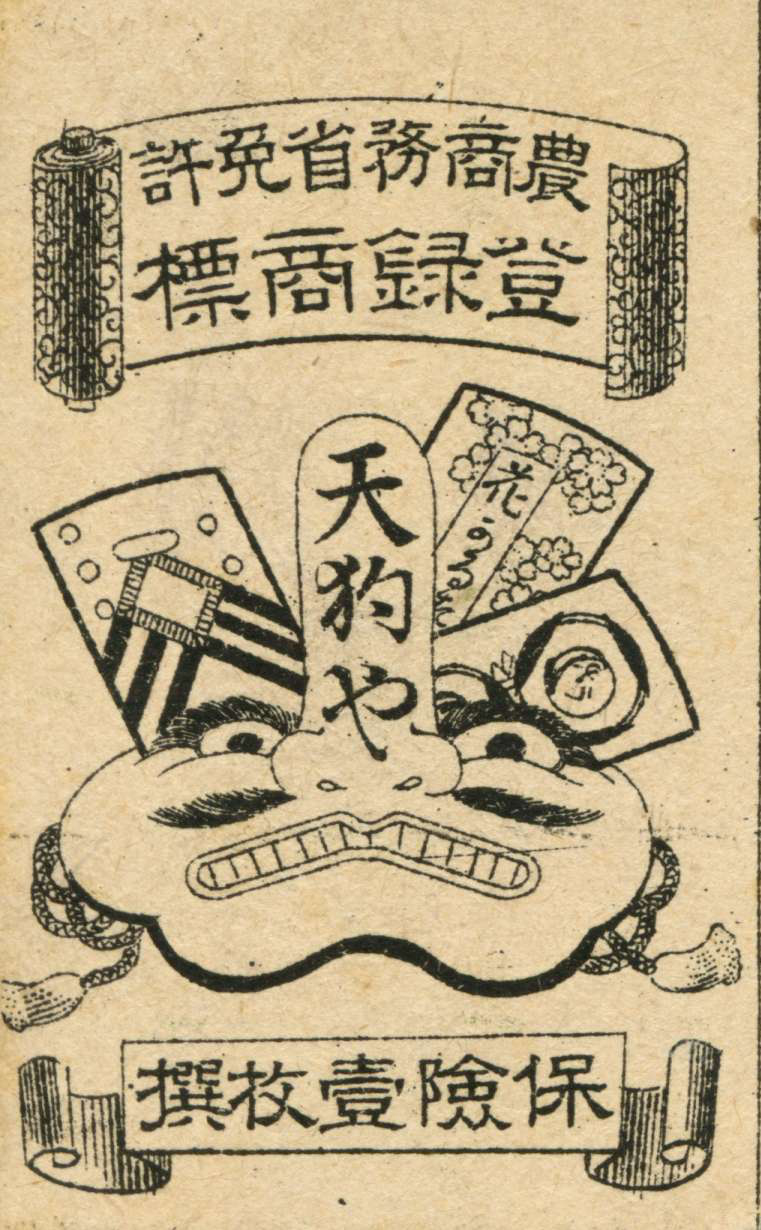
Founded around 1894, Tsuchida Tenguya was based in Ōsaka, and also manufactured Western and kabu cards. Their mark was 天 in a square.

© WCMPCused with permission
Wrapper, maker’s mark (on Wisteria), and advertising card from a daitengu deck.
In the 1930s they offered the following brands (in descending price order):
花の譽 (hana no homare, ‘flower’s honour’)
福天狗 (fukutengu, ‘lucky tengu’), also used for mushi-, kabu-, mekuri-, and mamefuda
金天狗 (kintengu, ‘golden tengu’), also used for mushi-, kabu-, mekuri-, and mamefuda
銀天狗 (gintengu, ‘silver tengu’)
大天狗 (daitengu, ‘great tengu’), also used for mushi-, kabu-, mekuri-, and mamefuda
美人天狗 (bijintengu, ‘beauty tengu’)
中天狗 (nakatengu, ‘middle tengu’)
花天狗 (hanatengu, ‘flower tengu’), only used for mushifuda
三天狗 (santengu, ‘three tengu’)
國の花 (kuni no hana, ‘nation’s flower’)
八重櫻 (yaezakura, ‘eight-fold cherry blossom’, a double-flowered cherry blossom), also used for mushifuda
福助 (fukusuke), only used for kabu-, mekuri-, and mamefuda
紅梅 (kōbai, ‘red plum’)
張貫 (harinuki, a manufacturing technique), only used for kabu-, mekuri-, and mamefuda
一楽 (ichiraku, ‘one of one’s hobbies’), only used for kabu-, mekuri-, and mamefuda
五光 (gokō, ‘five brights’)
青天狗 (aotengu, ‘blue tengu’), only used for kabu-, mekuri-, and mamefuda
天狗 (tengu, ‘tengu’), only used for mamefuda
© WCMPCused with permission
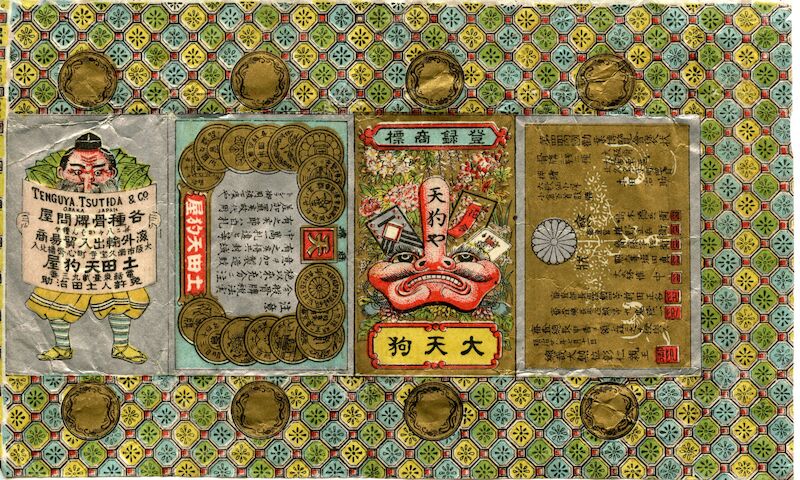
An outer wrapper for the daitengu brand.
 Usui Nikkagetsudō (臼井日月堂)/Kyōto Karuta (京都カルタ)
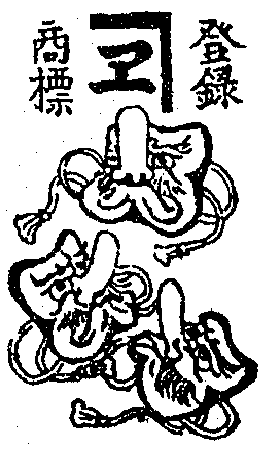
Usui Nikkagetsudō’s trademark, registered on the 9th of October 1894 by Usui Iwajirō (臼 井岩次郎) (東京書院, 日本登録商標大全. 第六編, 66).
Founded around 1894, their mark was ヱ in an angle, this company was at first called Usui Nikkagetsudō and then later Kyōto Karuta — not to be confused with the later Kyōto Karuta who were active in the 1960s & 70s!
Their brands included:
百萬圓 (hyakumanen, ‘one million yen’), trademarked in 1921Ibid.
 Baba Keieidō (馬場京栄堂)
Existed in Kyōto in 1948;山口, 最後の読みカルタ, 102. mark was a circled 京.
 Heibon (平凡)
This Tōkyō manufacturer stopped producing shortly after 1972.Hatton, ‘Modern Japanese Wrappers’, 42. Their maker’s mark was the phrase 天下一 (tenkaichi ‘best in the world’) written inside a large koban. Their brands included:
四天王 (shi tennō the four heavenly kings), also used for Kabufuda
牡丹獅子 (botanjishi ‘peony and lion’), also used for Kabufuda
金時桜 (kintokizakura ‘Kintoki and cherry blossom’)
旭富士 (asahifuji ‘Fuji sunrise’)
桜判官 (sakurahangan ‘cherry blossom judge’, a reference to Tōyama Kagemoto)
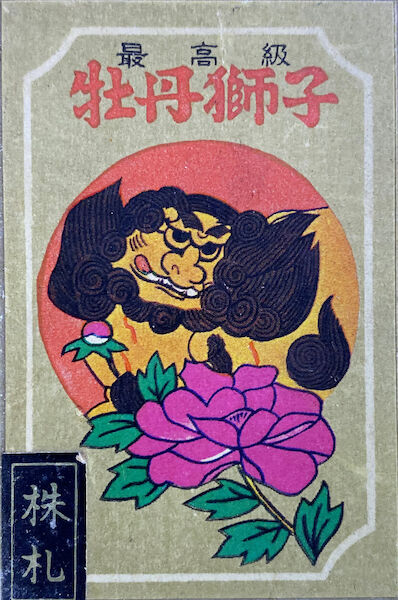
© 2021 Ryan Sartorused with permission
Heibon’s botanjishi wrapper. Note the sticker indicating that the box contains Kabufuda cards.
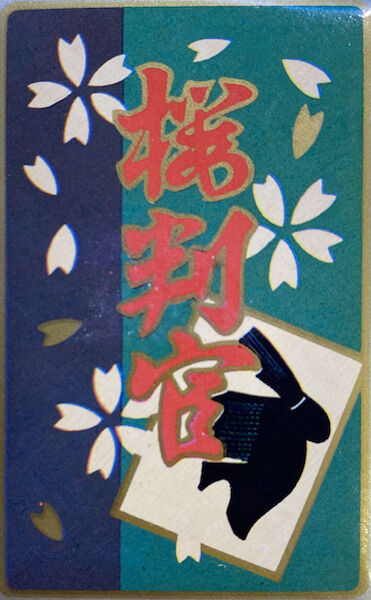
© 2021 Ryan Sartorused with permission
Heibon’s sakurahangan wrapper.
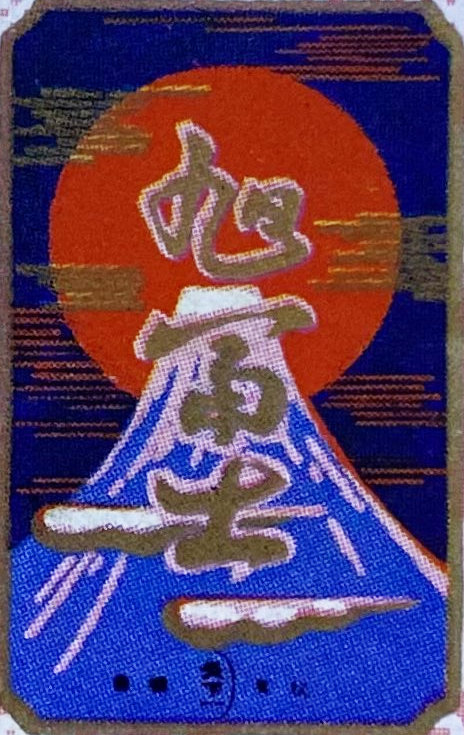
© 2021 Ryan Sartorused with permission
Heibon’s asahifuji wrapper. (Low-resolution image from the side of a botanjishi wrapper.)
Kawakita (川北)
Kawakita had its own brands but cards were made by Yamashiro Shōten. It closed after 1962.Ibid., 48–9. Brands included:
牛若丸 (ushiwakamaru, the childhood name of Minamoto no Yoshitsune)
金閣寺 (kinkaku-ji, the Golden Pavilion in Kyōto)
銀閣寺 (ginkaku-ji, the Silver Pavilion in Kyōto)
弁慶 (benkei, a famous warrior monk)
大文字 (daimonji, a mountain in Kyōto)
祇園 (gion, the geisha district of Kyōto)
 Kohara Honten (小原本店)
Kohara was a manufacturer based in Ōsaka until 1980.Ibid., 48. Their manufacturer’s mark was a circled さ, and brands included:
鬼印 (onijirushi, ‘ogre brand’, also for Kabufuda and Harifuda)
王将 (ōshō, the king of the stronger player in Shōgi, also used for Kabufuda)
大登龍 (daitōryū, ‘great rising dragon’), also used for Kabufuda
金札印 (kinfudajirushi, ‘golden card brand’)
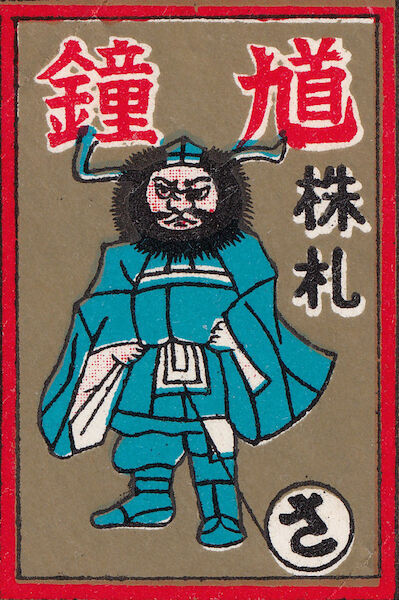
鍾馗 (shōki, Shōki the demon-queller)
馬印 (umajirushi, ‘horse brand’)
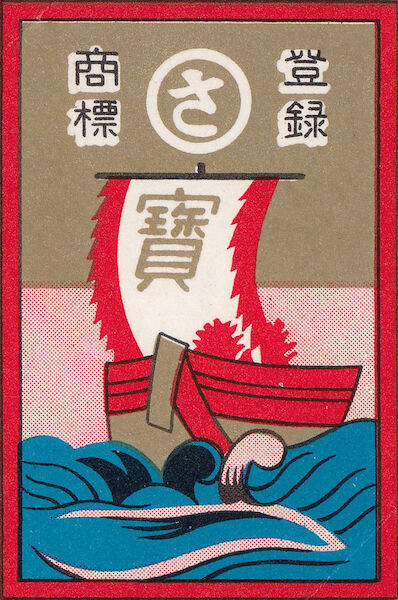
宝船 (takarabune, ‘treasure ship’)
寶引 (hōbiki, ‘treasure pull’, a kind of lottery where one rope out of a bundle was tied to the prize, and whoever pulled it won; these were Hikifuda cards)
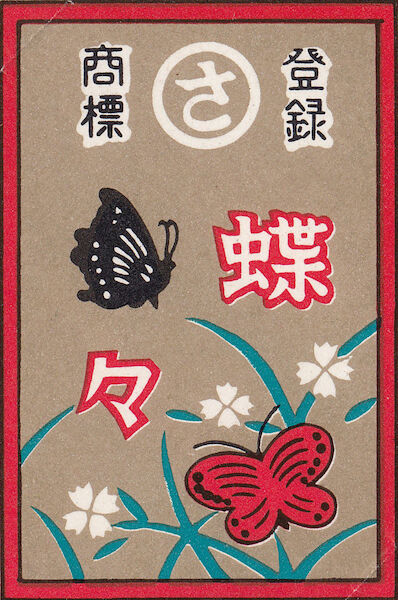
蝶々 (chōchō, ‘butterflies’)
松竹梅 (shōchikubai, ‘pine bamboo plum’, the “three friends of winter”)
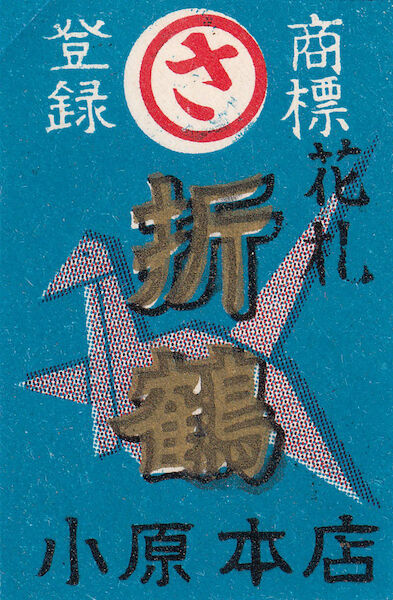
折鶴 (oridzuru, ‘origami crane’)
八千代 (yachiyo, ‘forever’, literally ‘eight thousand years’)
鳴戸 (naruto, ‘whirlpool’)
船 (fune, ‘ship’), used for Kabufuda
成駒家 (narikomaya, a kabuki actor’s yagō, probably here referring to Nakamura Ganjirō II)
三ッ葉葵 (mitsuba-aoi, a mon consisting of three birthwort leaves used by the Tokugawa clan)
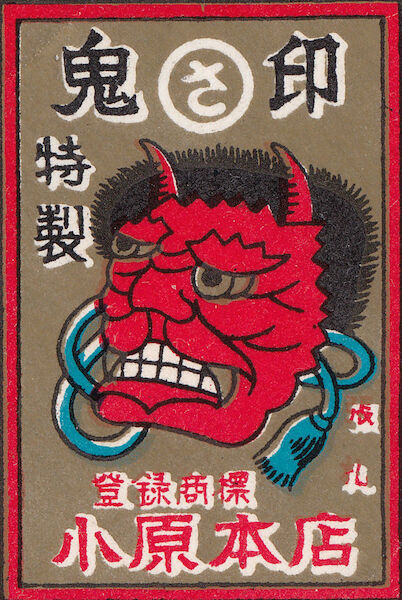
© George Pollard🅭🅯🄏🄎
The onijirushi wrapper.
© George Pollard🅭🅯🄏🄎
The takarabune wrapper.
© George Pollard🅭🅯🄏🄎
The shōki wrapper.
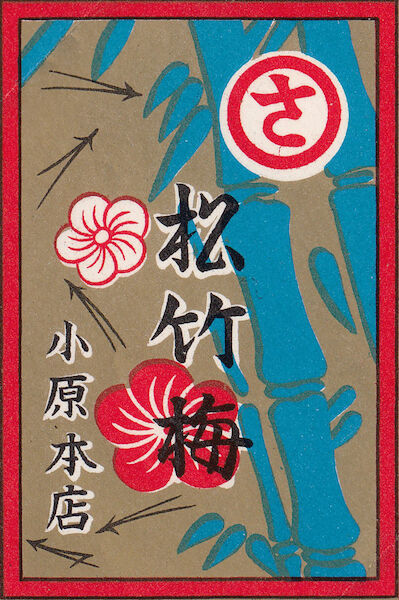
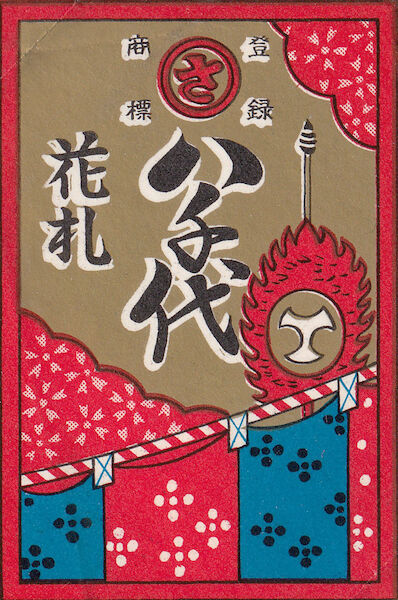
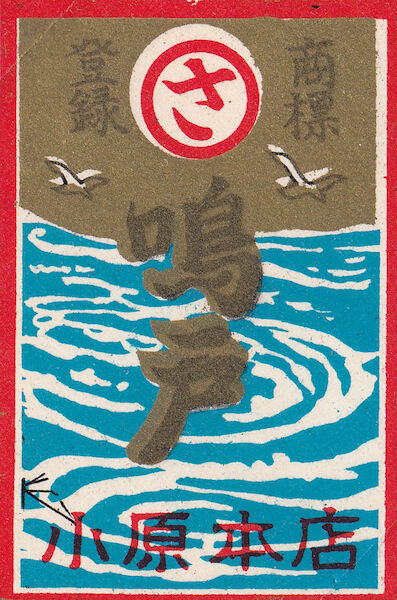
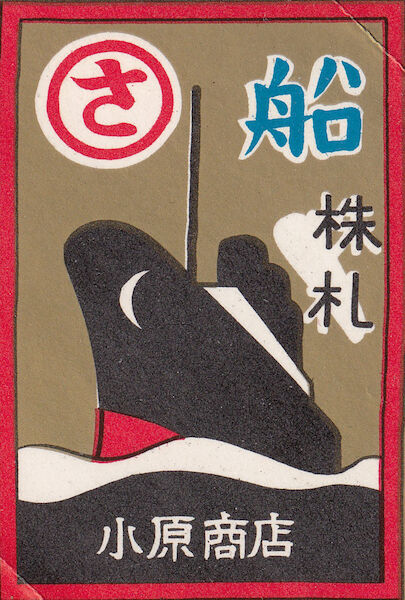
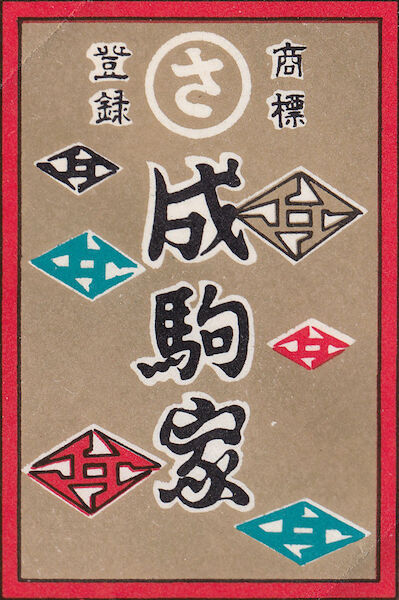
 Nakao Kōkeidō (中尾晃恵堂)
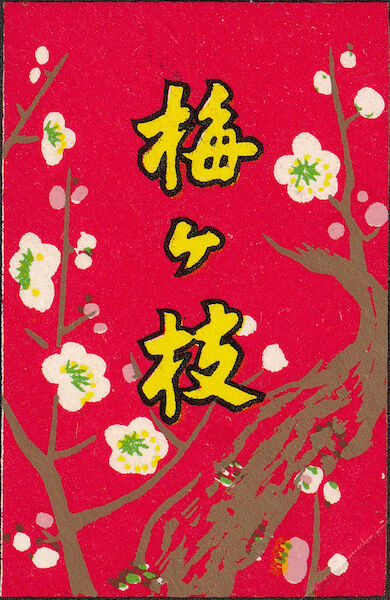
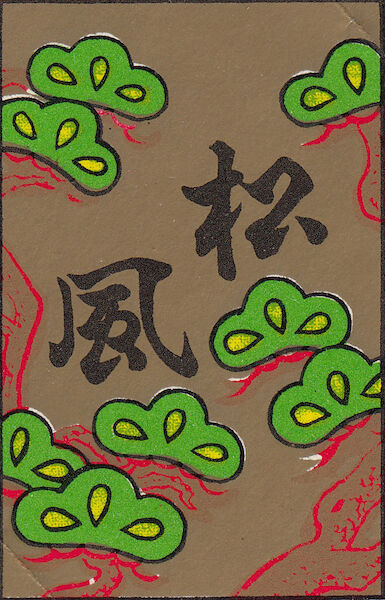
A company in Ōsaka which had its cards manufactured by Nihon Karuta. Its mark was circled 恵. The only brands I know of are:
梅ヶ枝 (umegae, ‘plum branch’)
松風 (matsukazu, ‘(the sound of) wind blowing through pine trees’)
 Nishimura (西村)
© 2020 Marcus Richertused with permission
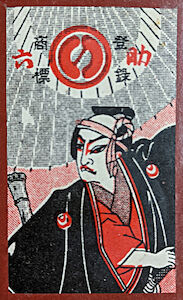
An extra ‘advertising’ card featuring the kabuki character Sukeroku, who appeared often in Nishimura’s branding. Sukeroku popularized the style of umbrella called a ‘snake-eye umbrella’ (蛇の目傘) due to its pattern, so this type of umbrella is also referred to as a Sukeroku-gasa (助六傘).
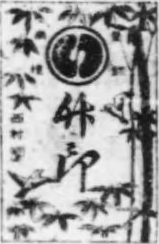
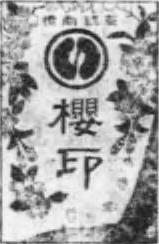
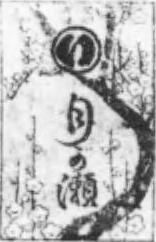
Early Nishimura trademarks, registered in 1915 by Nishimura Inosuke (西村伊之助 ) (東京書院, 日本登録商標大全. 第8輯 下, 296).
At first an important manufacturer in Tōkyō, but later cards were made by other makers including ŌishiTengudō.
The company existed in 1914, and was run by a NishimuraInosuke (西村伊之助).商工社, 日本全国商工人名録 (1914), 45.
Their mark was a circled い, and their brands included:Hatton, ‘Modern Japanese Wrappers’, 54–8.
金助六 (kinsukeroku, ‘golden Sukeroku’)
銀助六 (ginsukeroku, ‘silver Sukeroku’)
小天狗 (kotengu, ‘little Tengu’)
花の花 (hana no hana, ‘flower of flowers’)
白雪 (shirayuki, ‘white snow’)
百万石 (hyakumangoku, ‘one million koku’, a nickname for the rich Kaga domain, or its lord, in the Edo period), no longer produced as of 1980
奴さん (yakkosan, ‘guy’, a samurai manservant, also a traditional origami shape imitating a man), no longer produced as of 1980
奴印 (yakkojirushi, ‘guy brand’), trademarked in 1921東京書院, 日本登録商標大全. 第18輯 下, 331.
竹印 (takejirushi, ‘bamboo brand’), trademarked in 1915東京書院, 日本登録商標大全. 第8輯 下, 296.
櫻印 (sakurajirushi, ‘cherry brand’), trademarked in 1915Ibid.
月𛀙瀬/月ヶ瀬 (tsukigase, a place famous for its plum blossoms), trademarked in 1915Ibid.
星印 (hoshijirushi, ‘star brand’), trademarked in 1916東京書院, 日本登録商標大全. 第9輯 下, 289.
花乃王 (hana no ō, ‘king of flowers’, i.e. the peony), trademarked in 1918東京書院, 日本登録商標大全. 第11輯 下, 331.
龍田川 (tatsutagawa, ‘Tatsuta river’), trademarked in 1918Ibid.
大正錦 (Taishō nishiki, ‘Taishō brocade’), trademarked in 1921東京書院, 日本登録商標大全. 第18輯 下, 330.
弁慶 (Benkei, ‘Benkei’), trademarked in 1921Ibid.
二福 (nifuku, ‘two fortunes’, picturing Ebisu and Daikokuten), trademarked in 1921Ibid., 331.
圓満 (enman, ‘harmony’), trademarked in 1921Ibid., 332.
東山 (higashiyama, ‘Higashiyama’)
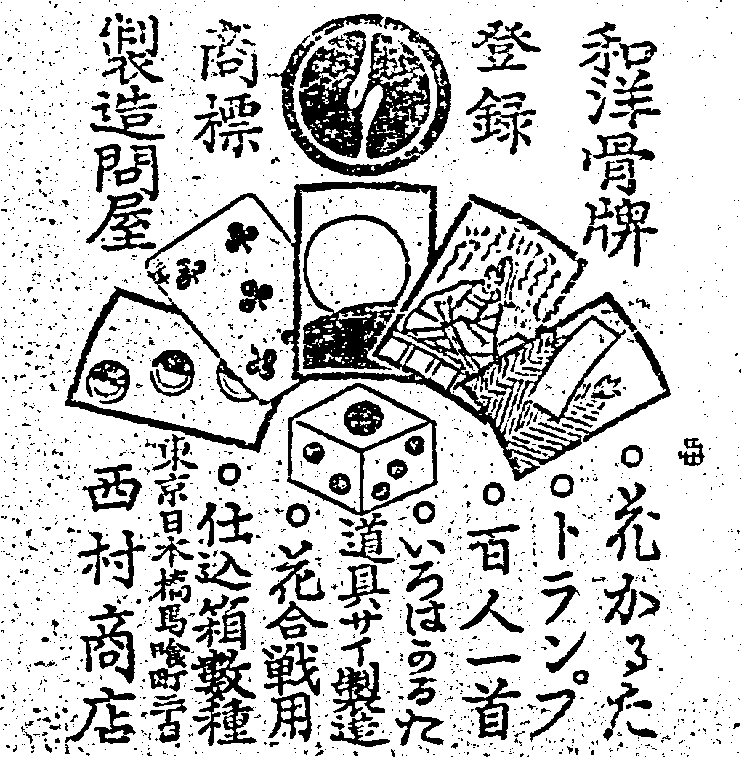
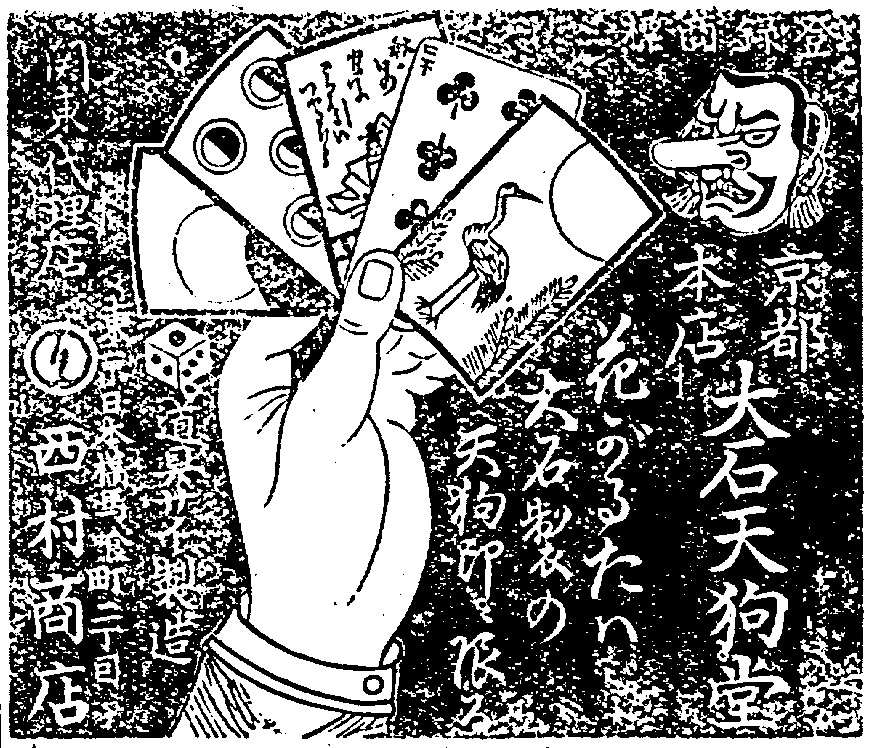
Two Nishimura advertisements, from the December 1907 issue of the “Tokyo Toilet Trade Journal”. The advert on the right shows that they also sold Ōishi Tengudō products.
Kyōto Karuta (京都かるた)
A Kyōto manufacturer, founded by an ex-employee of Nihon Karuta. They were active in the 1960s & ’70s, but closed in the 1990s.梅林勲, ‘地方の花札屋さん’ (2006). Their brands included:Hatton, ‘Modern Japanese Wrappers’, 49.
金の司 (kin no tsukasa ‘officer of gold’)
大帝王 (daiteiō ‘great emperor’, also used for Kabufuda)
神鉾 (kamihoko ‘sacred halberd’, also used for Kabufuda)
つかさ天狗 (tsukasatengu, ‘chief tengu’)
花あらし (hanaarashi, ‘flower storm’, a heavy fall of blossoms)
短冊 (tanzaku, ‘poetry strip’)
ぼたん (botan, ‘peony’)
 Dai Nippon (大日本)
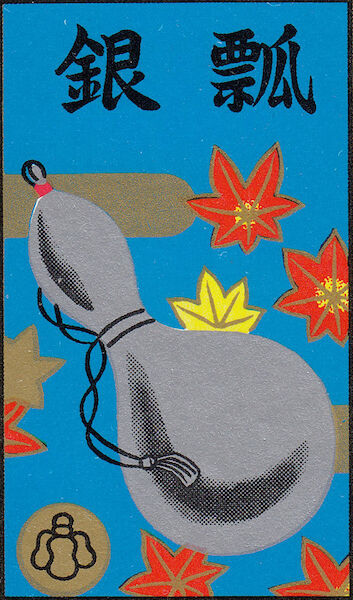
A manufacturer from the city of Yōkaichi (now part of Higashiōmi), Shiga prefecture (滋賀県八日市市). Their logo is a group of three gourds, which is considered to be a lucky symbol.
Brands included:Ibid., 46.
銀達磨 (gindaruma ‘silver Daruma’)
千姫 (senhime ‘Lady Sen’)
銀瓠 (ginhyō ‘silver gourd’)
金瓠 (kinhyō ‘gold gourd’)
豊太閤On some versions of this, it is misspelt 豊太閣. (hōtaikō, a title of honour for Toyotomi Hideyoshi)
千成 (sennari, short for 千成瓢箪 sennaribyōtan ‘thousand gourds’, the standard used by Hideyoshi)
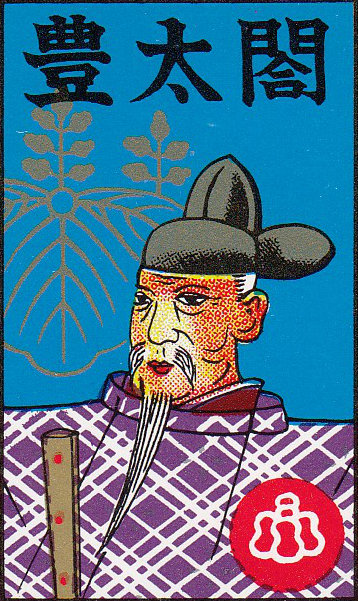
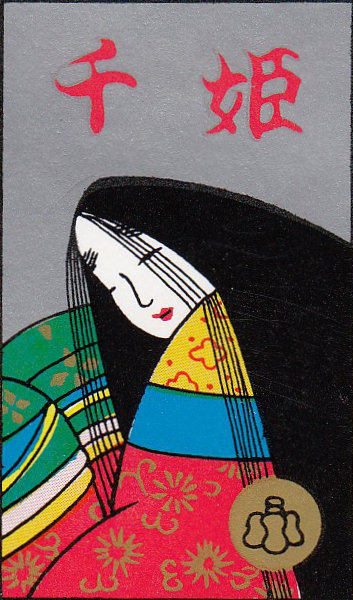
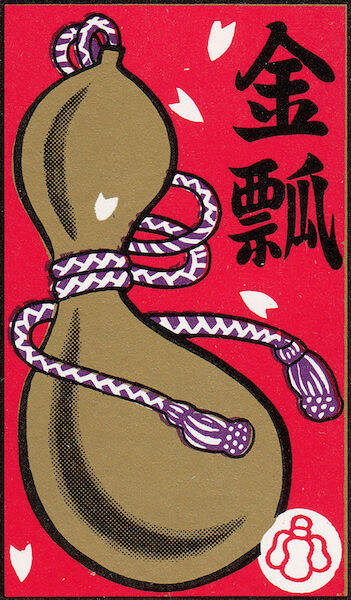
Nippon Yūgi Gangu/Nichiyū (日本遊戯玩具/ニチユー)
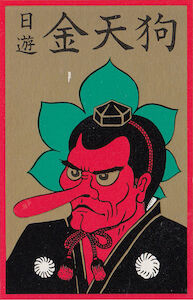
© George Pollard🅭🅯🄏🄎
Nippon Yūgi’s kintengu brand.
Nippon Yūgi (also known as Nichiyū) was founded in Tōkyō in 1946. They still exist but no longer appear to produce Hanafuda cards, instead specializing in tarot. Their previous brands included:Hatton, ‘Modern Japanese Wrappers’, 54.
白鶴 (hakuzuru, ‘white crane’)
(日遊)金天狗 ((nichiyū) kintengu, ‘Nippon Yūgi golden Tengu’)
鳳 (ōtori, ‘splendid bird’, a male Japanese phoenix)
宴 (utage, ‘banquet’)
大入叶 (ōirikanō, ‘grant a full house’, a theatre term)
兜 (kabuto, ‘samurai helmet’)
花川戸 (hanakawado, a place in Tōkyō)
花あわせ (hana-awase, ‘flower matching’)
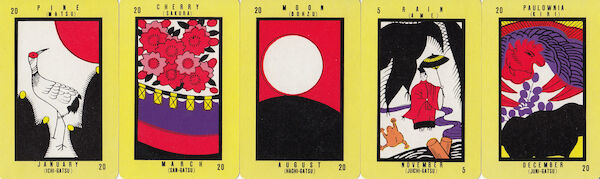
They also produced a poker-sized Hanafuda deck that included point values on the cards, as well as the name of the month and the flower associated with the month. Interestingly, the point values on some of the cards indicate that they were intended to be played with Hawaiian rules.
© George Pollard🅭🅯🄏🄎
Nippon Yūgi’s poker-format deck, possibly created for sale in Hawai'i.
Universal (ユニバーサル)
© George Pollard🅭🅯🄏🄎
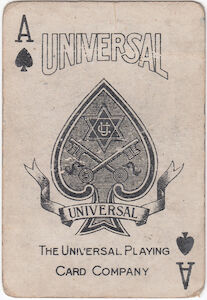
Universal also published standard Western decks; this Ace from a “No. 706” deck shows the logo of a star containing the letters U & C intertwined.
The Universal Playing Card Company was founded in 1914, and based in Ōsaka.‘ウニバーセルトランプ’ (1935). Their maker’s mark on Hanafuda decks was a drawstring purse (巾着 kinchaku); elsewhere they used a six-pointed star containing “UNIVERSAL” or an interlocked U & C. Their own brands included:
ゴム花 gomuhana, ‘rubber flower’,Hatton, ‘Modern Japanese Wrappers’, 59–62. for decks made with plasticised cards
萬年花 mannenhana, ‘10 000 year flower’Ibid.
壺 tsubo, depicting a vase (in yellow) like that shown on the Joker card below
In addition to Hanafuda, they produced Western cards and Ceki cards for export. In 1935 they exported a total of 10 million decks.‘ウニバーセルトランプ’.
Like other manufacturers, they produced combination Trump-Hana (トランプ花) decks, and in multiple sizes: the smallest size deck (numbered “350”) has cards that are much closer in size to that of Hanafuda than other brands’ combination cards are. A very similar deck was published under the brand “Star Playing Cards” (numbered “807”, with a five-pointed star).
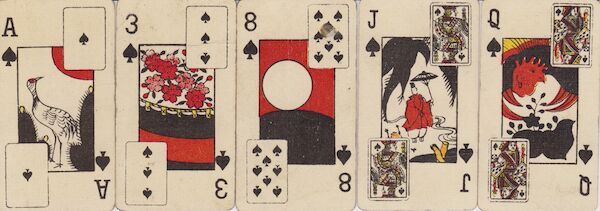
© George Pollard🅭🅯🄏🄎
The Bright cards of Universal’s Trump-Hana deck. This particular deck is listed as number “350” on the packaging.
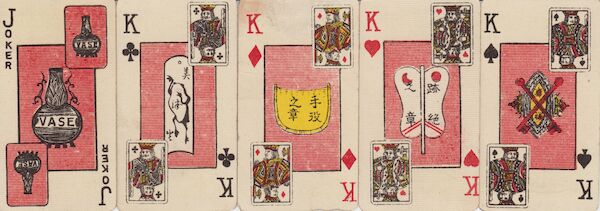
© George Pollard🅭🅯🄏🄎
The extra Hachi-Hachi-related cards of Universal’s Trump-Hana deck. I’m not sure of the significance of the “vase” Joker, since usually the Joker has the manufacturer’s name. It could be intended as a multilingual pun on “Universal” (ユニバーセル yunibāseru) → “Universe” (ユ ニバース yunibāsu), which sounds like “uni-vase” (one vase).
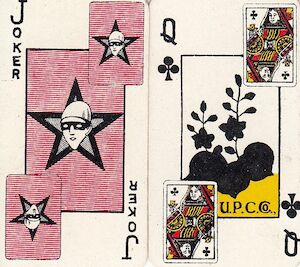
© George Pollard🅭🅯🄏🄎
The joker and manufacturer’s Paulownia card from the “Star Playing Cards” brand. The Universal #350 deck’s manufacturer’s card is identical to this one.
A larger sized Hana-Trump deck (numbered “25”) of theirs has different Kings which feature additional Hanafuda-style cards that could be used as an additional suit in games with more players.
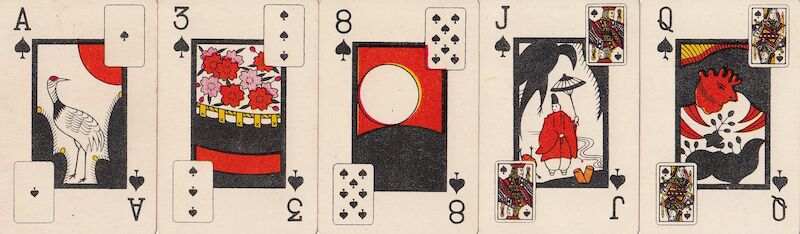
© George Pollard🅭🅯🄏🄎
The Bright cards of Universal’s Hana-Trump deck. This particular deck is listed as number “25” on the packaging.
© George Pollard🅭🅯🄏🄎
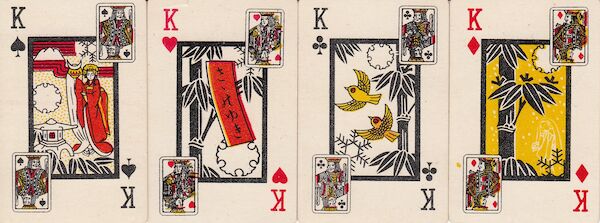
The Bamboo–King extra suit of Universal’s Hana-Trump deck. The extra cards, from left-to-right, are: an additional Bright card featuring Princess Yaegaki (八重垣姫 ), a character from the traditional bunraku (and later kabuki) play 24 Paragons of Filial Piety (本朝廿四孝, Honchō Nijūshikō), who is taking a magical helmet to her lover across frozen Lake Suwa; the tanzaku card, which is inscribed さゝ𛂜ゆ き (sasa no yuki, ‘snow on bamboo’); the tane card, showing two sparrows; and the kasu card, which has a yellow background similar to one of the Paulownia cards.
© George Pollard🅭🅯🄏🄎
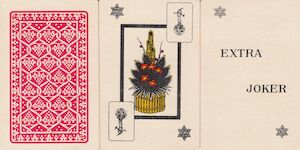
The reverse of the deck features a grape vine pattern. There are also two jokers included, one featuring a kadomatsu (門松), and the other with significantly less effort invested in its design. Note the small six-pointed stars in the corners, containing the letters U & C intertwined.
 Kawai
A manufacturer from Ōsaka, whose mark was 万 with corner at top-right.Gernot Prunner, Ostasiatische Spielkarten (1969), 135.
 Akata Shōjōya (赤田猩々屋)
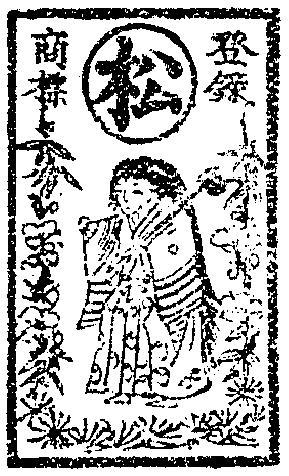
Akata Shōjōya’s trademark, registered on the 24th of April 1900 by Akada Hanjirō (赤田 半次郎) (東京書院, 日本登録商標大全. 第六編, 67).
A Kyōto manufacturer whose mark was 松 in a circle. Their mascot was a shōjō, a Japanese sea spirit who is depicted as carrying a long-handled sake ladle.
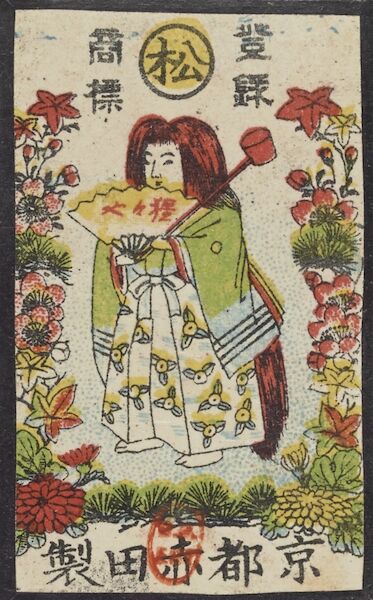
An additional manufacturer’s card included with an Akata Shōjōya deck, produced after 1902. BnF Gallica has high-quality scans of this deck, and Yale University also owns a copy.
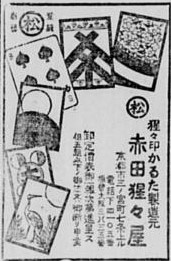
An advertisement for Akata Shōjōya cards in the Nichi Bei Times, September 1921. This indicates the cards were being imported into San Francisco in the 1920s.
Suisando (翠山堂)
A manufacturer that has a very finely-detailed deck of cards reproduced in A History of Playing Cards (13). I know of no further information about them.
 Nihon Goraku (日本娯楽)
© Marcus Richertused with permission
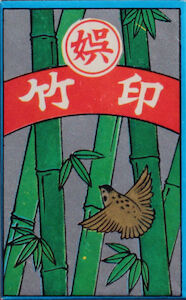
Nihon Goraku’s takejirushi wrapper.
Nihon Goraku was founded in 1945 as Takahashi Shōten (高橋商店), was renamed Nishinihon Koppai (西日本骨 牌) in 1966, and became Nihon Goraku in 1968.日本娯楽, ‘会社案内|日本娯楽’ (2018). They were based in Shinhama, Onomichi city, Hiroshima (広島県尾道市新浜), and originally had their cards manufactured by Kyōto Karuta. Nowadays the company imports musical instruments.
Their mark was a circled 娯. Their brands were:
 Nishiguchi Shōten (西口商店)
Nishiguchi also manufactured board games (such as Gunjin Shogi) Some of their decks were manufactured by Nihon Karuta. Their mark was a circled 榮, the same as Kyōwadō. Brands included:
おたのしみ (otanoshimi, ‘enjoyment’)
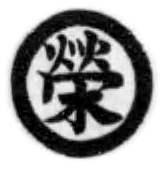
Nishiguchi’s trademark, registered on the 3rd of October 1914 by Nishiguchi Eisuke ( 西口榮助) (東京書院, 日本登録商標大全. 第7輯 下 (1915), 226).
© George Pollard🅭🅯🄏🄎
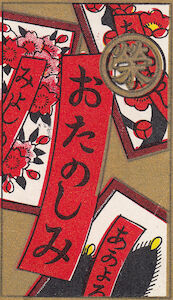
The otanoshimi wrapper.
Kyōwadō (京和堂)
A company about which I know very little. Presumably from the name they were based in Kyōto. Their mark was a circled 榮, the same as Nishiguchi Shōten. Their brands included:
京寶船 (kyōtakarabune, ‘Kyōto treasure ship’)
京紅梅 (kyōkōbai, ‘Kyōto red plum’)This is a likely categorization based upon the design of the box, but the maker’s mark appears to be different.
 Kamigataya (上方屋)
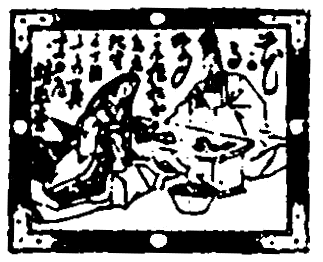
Kamigataya’s earliest trademark, registered on the 2nd of October 1889 by Maeda Kihei ( 前田喜兵衛) (東京書院, 日本登録商標大全. 第六編, 65).
For more about Kamigataya, see the history article. Early on, Kamigataya had decks made (by Nintendō) with their own brand, but they would later sell Nintendō-branded cards directly. Their maker’s mark was 片󠄃 with angle.
In 1914, the company was run by one Kataoka Ei (片岡エイ). (Probably the logo dates from after Kamigataya was taken over by the Kataoka family.)
Their brands included:
白菊 (shirokiku, ‘white chrysanthemum’)
倭錦 (yamatonishiki, ‘ancient Japanese brocade’)
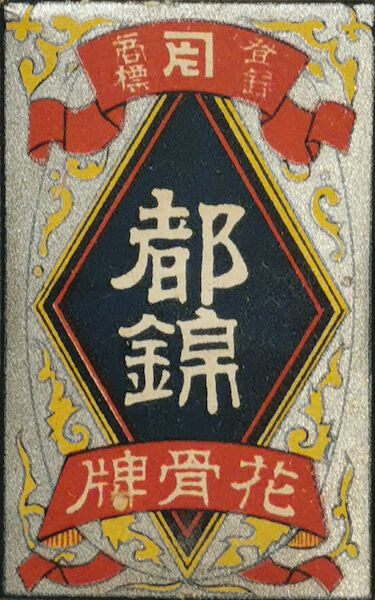
都錦 (miyakonishiki, ‘capital brocade’), trademarked in 1921東京書院, 日本登録商標大全. 第18輯 下, 333.
𣲅戸錦 (edonishiki, ‘Edo brocade’), trademarked in 1921Ibid.
八重錦 (yaenishiki, ‘multilayered brocade’), trademarked in 1921Ibid.
御殿櫻 (gotenzakura, ‘palace cherry blossoms’), trademarked in 1921Ibid.
大正櫻 (taishōzakura, ‘Taishō cherry blossoms’), trademarked in 1921Ibid.
大正花 (taishōhana, ‘Taishō flowers’), trademarked in 1921Ibid.
大正錦 (taishōnishiki, ‘Taishō brocade’), trademarked in 1921Ibid.
𠮷野櫻 (yoshinozakura, ‘Yoshino cherry blossoms’), trademarked in 1921Ibid.
百萬圓 (hyakumanen, ‘a million yen’), trademarked in 1921Ibid.
© 2021 beforemario.comused with permission
The miyako nishiki wrapper, manufactured by Nintendō (credited as “F. Yamauchi”).
 Marukin
 was a company based in the city of Sakata, Yamagata prefecture (山形県酒田市). Their mark was a circled 金. Brands included:
金天狗 (kintengu, ‘golden Tengu’)
 Ōtani Shōten (大谷商店)
Ōtani Shōten was a company based in the town of Sakurai, in Shiki district, Nara prefecture (奈良県磯城郡桜井町, now part of Sakurai). Their mark was a circled 大. Brands included:
千島 (chishima, ‘thousand islands’, the Japanese name for the Kuril Islands)
 Tōhoku Karuta (東北骨牌)
Tōhoku was a manufacturer based in the city of Tendō, Yamagata prefecture (山形県天童市 ). They originally appear to have been a manufacturer (including for Seieidō), but later outsourced production to Tamura Shōgundō. The company seems to still exist in some form as Tendon Shogi. Their manufacturer’s mark was a circled 特 , and their own brands included:
初梅 (hatsuume, ‘new plum’)
出羽桜 (dewazakura, ‘Dewa cherry’)
白菊 (shiragiku, ‘white chrysanthemum’)
Seieidō (精英堂)
© 2020 Ryan Sartorused with permission
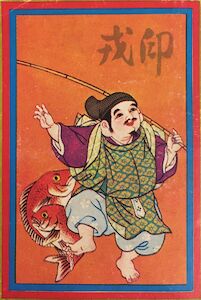
Seieidō’s Ebisu brand.
Seieidō was a post-war manufacturer. They do not appear to have had a manufacturer’s mark, instead writing their full name on the Paulownia card. Their brands included:
戎印 (ebisujirushi, ‘Ebisu brand’)
Tamei Fukujudō (為井福寿堂)
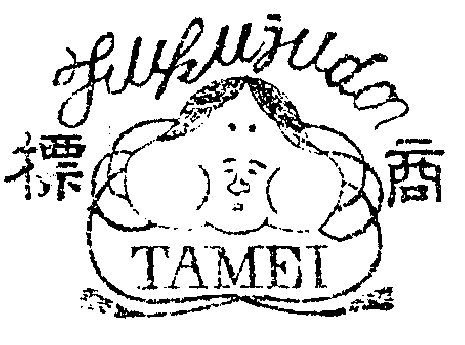
Tamei’s trademark, registered on the 8th of January 1900 by Tamei Tatsunosuke (為井辰之 助) (東京書院, 日本登録商標大全. 第六編, 67).
Tamei was founded around 1900 and unusually used a romanized version of their name as a mark. I only know of one brand:
弁慶 (benkei, not printed on box)
Sanjōya (三條屋)
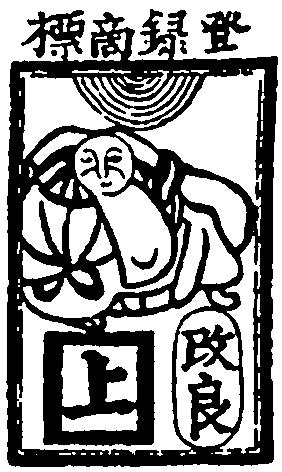


Sanjōya’s trademark, registered on the 24th of November 1890 by Kawasaki Matayoshi (川崎又吉) (東京書院, 日本登録商標大全. 第六編, 65).
Sanjōya was the second company to apply for a trademark for Hanafuda after Kamigataya. Their mark was 上 in a square. Another mark they used (for the store itself) was 又 under a mountain.
 Maruyoshi (マル芳)
Based in Ōsaka, their mark was 芳 in a circle. I know of nothing else about this manufacturer.
Itō Kōji Shōten (伊藤幸治商店)
A Kyōto manufacturer, only has one deck that I know of:
近代花 (kindaibana, ‘modern flowers’)
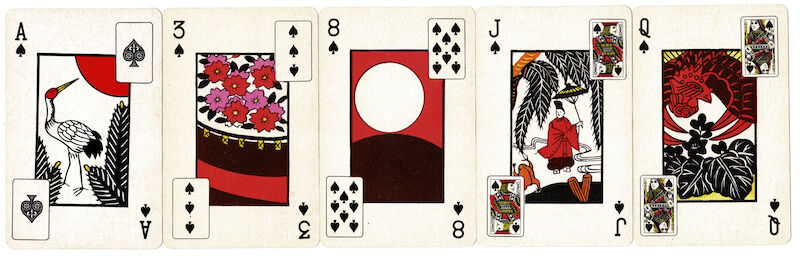
Alaska playing cards
Alaska was a playing-card company that also manufactured some hana-trump decks. I know of nothing else about them.
© George Pollard🅭🅯🄏🄎
The five brights of Alaska’s hana-trump deck.
Unknown
The following brands appear on decks whose manufacturers who have not yet been identified. If you have information about any of these feel free to contact me to help complete this catalogue.
𛂁𛁲゙𛁈𛀸/な𛁲゙𛁈𛀸/なでしこ (nadeshiko, ‘pink’ (the flower))
勝力士 (katsu rikishi, ‘winning sumo wrestler’)
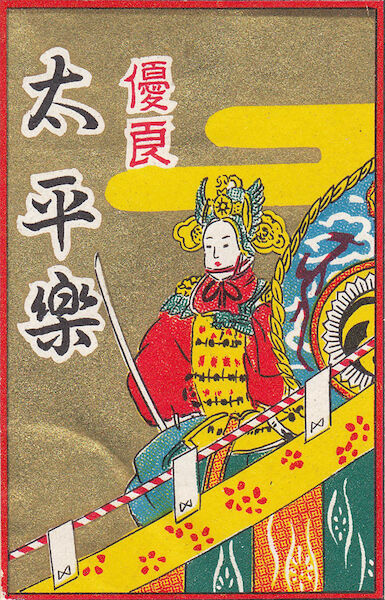
優良太平楽 (yūryō taiheiraku ‘excellent happy-go-lucky’, which is the name of a gagaku piece)
© George Pollard🅭🅯🄏🄎
The taiheiraku wrapper.
References
Anonymous (). ‘ウニバーセルトランプ’ [text in Japanese]. Pages 472 in 全国百貨店有名取引業者総覧. 百貨店新聞社: Japan.
Hargrave, Catherine Perry (). A History of Playing Cards. Dover Publications: Mineola, New York, USA. ISBN: 978-0-486-41236-8. First published in 1930.
Hatton, George (). ‘Modern Japanese Wrappers’. The Playing-Card vol. 10 (2), : pages 33–63.
Iwano Art Co. (). ‘松井天狗堂の買取致します’ [text in Japanese]. Iwano Art Co.
O’Donoghue, Freeman Marius (). Catalogue of the collection of playing cards bequeathed to the Trustees of the British museum by the late Lady Charlotte Schreiber. Longmans & Co.: London, UK.
Prunner, Gernot (). Ostasiatische Spielkarten [text in German]. Deutsches Spielkarten Museum: Germany.
Salter, Rebecca (). ‘Game over: the last days of hand-made Japanese playing cards’. Andon vol. 83, : pages 39–46.
商工社 (). 日本全国商工人名録 [text in Japanese]. 商工社: Japan.
商工社 (). 日本全国商工人名録 [text in Japanese]. 商工社: Japan.
山口, 泰彦 [Yamaguchi Yasuhiko] (). 最後の読みカルタ [text in Japanese]. 帝国コンサルタント社友会科学文化部出版局.
村上, 健司 [Murakami Kenji] (). 手わざの記憶 [text in Japanese]. 中央公論新社: Tōkyō, Japan.
東京書院 (). 日本登録商標大全. 第六編 [text in Japanese]. 東京書院: Japan.
東京書院 (). 日本登録商標大全. 第5輯 下 [text in Japanese]. 東京書院: Japan.
東京書院 (). 日本登録商標大全. 第7輯 下 [text in Japanese]. 東京書院: Japan.
東京書院 (). 日本登録商標大全. 第8輯 下 [text in Japanese]. 東京書院: Japan.
東京書院 (). 日本登録商標大全. 第9輯 下 [text in Japanese]. 東京書院: Japan.
東京書院 (). 日本登録商標大全. 第11輯 下 [text in Japanese]. 東京書院: Japan.
東京書院 (). 日本登録商標大全. 第14輯 下 [text in Japanese]. 東京書院: Japan.
東京書院 (). 日本登録商標大全. 第17輯 下 [text in Japanese]. 東京書院: Japan.
東京書院 (). 日本登録商標大全. 第18輯 下 [text in Japanese]. 東京書院: Japan.
梅林, 勲 [Umebayashi Isao] (). ‘地方の花札屋さん’ [text in Japanese]. Japan Academy of Gambling & Gaming Studies Newsletter (9), .